We are a little over a week away from the official America 250 celebration day, on 4 July 2026, although preparations and commemorations began months ago.
This year’s Fourth of July is a once-in-a-lifetime event, as America celebrates its quarter of a millennium anniversary, also known as a Semiquincentennial.
 July Fourth 2026 is the 250th anniversary of the Declaration of Independence, when the Continental Congress officially adopted the Declaration of Independence and declared that the Thirteen Colonies were no longer part of Great Britain, but were independent sovereign states and were part of a new nation.
Here are some interesting facts about the Declaration of Independence and the men who signed the document. I hope you enjoy learning about America’s beginnings.
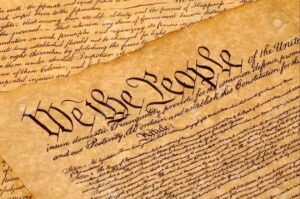
Declaration of Independence
The 13 original colonies were established by British settlers along the East Coast of North America and consisted of New Hampshire, Massachusetts, Rhode Island, Connecticut, New York, New Jersey, Pennsylvania, Delaware, Maryland, Virginia, North Carolina, South Carolina, and Georgia.
About 2.5 million people were living in the Colonies when they gained independence from England and their ruler King George III.
The colonial Continental Congress declared that the 13 North American British Colonies were independent of British rule on 2 July 1776. The Declaration of Independence was finalized as a written document on 4 July 1776.
Thomas Jefferson was the author of the Declaration of Independence because of his reputation as a writer. Jefferson borrowed ideas and passages from existing documents and works, including George Mason’s Virginia Declaration of Rights. Timothy Matlack, clerk to Continental Congress Secretary Charles Thomson, is believed to have penned the official copy.
There are five parts to the Declaration.
More than one copy of the Declaration of Independence exists.
After the Declaration was adopted, the “Committee of Five” (Thomas Jefferson, John Adams, Benjamin Franklin, Roger Sherman and Robert R. Livingston) directed the reproduction of the approved text, which was completed at Philadelphia printer John Dunlap’s shop. Dunlap’s copies, called Dunlap Broadsides, were dispatched on 5 July to newspapers of the 13 Colonies, local officials, and the commanders of the Continental troops. The Pennsylvania Evening Post was the first colonial newspaper to run the Declaration of Independence in its 6 July 1776, edition. It took some time to reach other colonies. South Carolina did not receive word until 2 August 1776.
Of the estimated 200 Dunlap Broadsides copies printed, only 26 copies survive today. In 1989, a Philadelphia man found an original Dunlap Broadside hidden in the back of a picture frame he bought at a flea market for $4. In 2008, the 26th-known Dunlap Broadside was found at the British National Archives, found in a box of papers sent to the Crown centuries ago by a British official in colonial America.
George Washington read the Declaration of Independence in front of the New York City Hall on 9 July 1776, and a riot broke out during the reading. Rioters toppled a statue of King George III and melted it down to make 42,000 musket balls for the Revolutionary Army.
Although Congress officially adopted the Declaration of Independence on 4 July, most of the delegates signed the document in Philadelphia on 2 August 1776.
North Carolina was the first colony to grant their Congressional delegation permission to vote for independence.
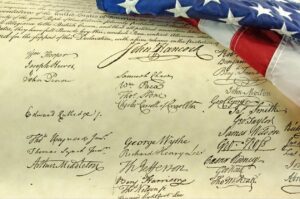
Declaration of Independence signatures
Fifty-six people signed the Declaration of Independence. It is believed that 49 delegates signed at the 2 August 1776 meeting, another six signed at some point over the next four months, and Thomas McKean of Delaware signed by 1781. General George Washington was busy with other activities (being Commander-in-Chief of the Continental Army) and did not sign the Declaration. Committee of Five member Robert Livingston of New York refused to sign, possibly hoping for reconciliation with Great Britain.
The oldest signer of the Declaration of Independence was Benjamin Franklin, age 70, and the youngest signer was Edward Rutledge, 26.
Eight of the 56 signers were born in the U.K. Button Gwinnett and Robert Morris were born in England, Francis Lewis in Wales, James Wilson and John Witherspoon in Scotland, George Taylor and Matthew Thorntonin Ireland, and James Smith in Northern Ireland.
Richard Stockton, a New Jersey lawyer, was the only signer of the Declaration of Independence to recant his support of the revolution and repudiate his signature after he was captured by the British and forced to swear his allegiance to King George. After he escaped British captivity, he took a new oath of loyalty to the state of New Jersey in December 1777.
The Continental Congress formally declared the name of the new nation to be the United States of America, which replaced the name United Colonies.
There is a message on the back of the Declaration, “Original Declaration of Independence dated 4th July 1776.” Experts believe it was a label added at some point when the Declaration was in storage.
The Declaration has been protected over the years. Stephen Pleasonton saved the Declaration of Independence, the Constitution, and the Bill of Rights from destruction by British forces in 1814. Both the Declaration and Constitution were packed up about two weeks after the Pearl Harbor attack and were given a military escort to Fort Knox for safekeeping. They were returned to Washington, D.C., in 1944.
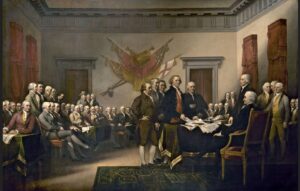
Declaration of Independence
Founding Fathers:
Warren G. Harding (1865-1923) is credited with creating the term “Founding Fathers.”
Harding, the 29th U.S. President from 1921-1923, was from Blooming Grove, Ohio.
George Washington, John Adams, Thomas Jefferson, Benjamin Franklin, James Madison and Alexander Hamilton are considered the Founding Fathers of America.
Benjamin Franklin was one of six people who signed both the Declaration and the Constitution. The others were George Read, Roger Sherman, Robert Morris, George Clymer, and James Wilson.
Founding Father Alexander Hamilton served as the first Secretary of Treasury.
James Monroe was the last of the Founding Fathers to be President.
Founding Father John Jay was the first chief justice of the United States.
George Washington’s birthday changed from 11 February to 22 February when Britain and its Colonies shifted from the Julian calendar to the Gregorian calendar in 1752.
Benjamin Franklin opted for “air baths” instead of regular baths.
John Adams had a dog named Satan when he was President.
Thomas Jefferson and John Adams died on the same day on the 50th Anniversary of the Declaration.
July 4th Trivia:
Philadelphia hosted the first official Independence Day celebration on 4 July 1777.
The first 4th of July celebration to be held at the White House was in 1801, when Thomas Jefferson was president.
The Fourth of July was not widely celebrated until after 1812.
John Adams firmly believed that 2 July was the correct day on which to celebrate American independence and refused to appear at 4th of July events.
The Liberty Bell rings 13 times on each Independence Day.
The 4th of July was first declared a national holiday in 1870.
Three U.S. presidents died on the 4th of July: John Adams and Thomas Jefferson, both on 4 July 1826, and James Monroe, on 4 July 1831.
Calvin Coolidge was born 4 July 1872.
Today, about 150 million hot dogs are eaten on the 4th of July, making it one of the most popular food items for the holiday.
Revolutionary War:
Samuel Adams founded the Sons of Liberty, the group responsible for the Boston Tea Party.
The first day of the American Revolutionary War was 19 April 1775 and the war lasted 8 years.
“No taxation without representation” was a main political slogan during the American Revolution.
Paul Revere is credited with shouting “The British are coming!” on his midnight ride to Lexington, Massachusetts, to warn residents of coming soldiers. However, at the time everyone in the Colonies was British and shouting that would not make sense. Instead, he may have shouted, “the Regulars are coming.”
Colonists who supported the Monarchy called were called Tories.
Of the European countries, France gave the Colonies the most support during the Revolutionary War.
We Americans love celebrating the Fourth of July and America 250 is one we won’t forget, with special anniversary events all over the country.
So, for this monumental anniversary, proudly fly our country’s flag, watch the parades and fireworks and the special 250 celebrations, thank a veteran, have family gatherings and cookouts, and wear the Red, White, and Blue.
This is a great time to show our patriotism and reflect on the principles of freedom and liberty upon which our country was founded as we strive to preserve the type of government our forefathers envisioned, as set forth in the historic documents they created.
We hold these truths to be self-evident, that all men are created equal, that they are endowed by their Creator with certain unalienable Rights, that among these are Life, Liberty, and the pursuit of Happiness. –Thomas Jefferson, The Declaration of Independence.
Right now FIFA soccer fans from around the world are in the U.S. and it is interesting to hear how impressed they are with our country and with Americans. Something we knew all along, but it is good to hear their positive impressions and remarks.
This is the time to celebrate our great nation and to be thankful that we live in the greatest country on earth.
“And I’m proud to an American, where at least I know I’m free…” –Lee Greenwood
You can contact Karen at karen@karenmillerbennett.com