Nimrod Headington Journal, 1852, part 9

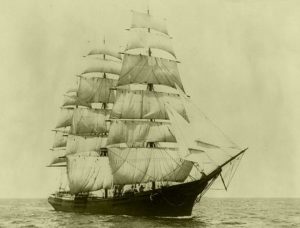
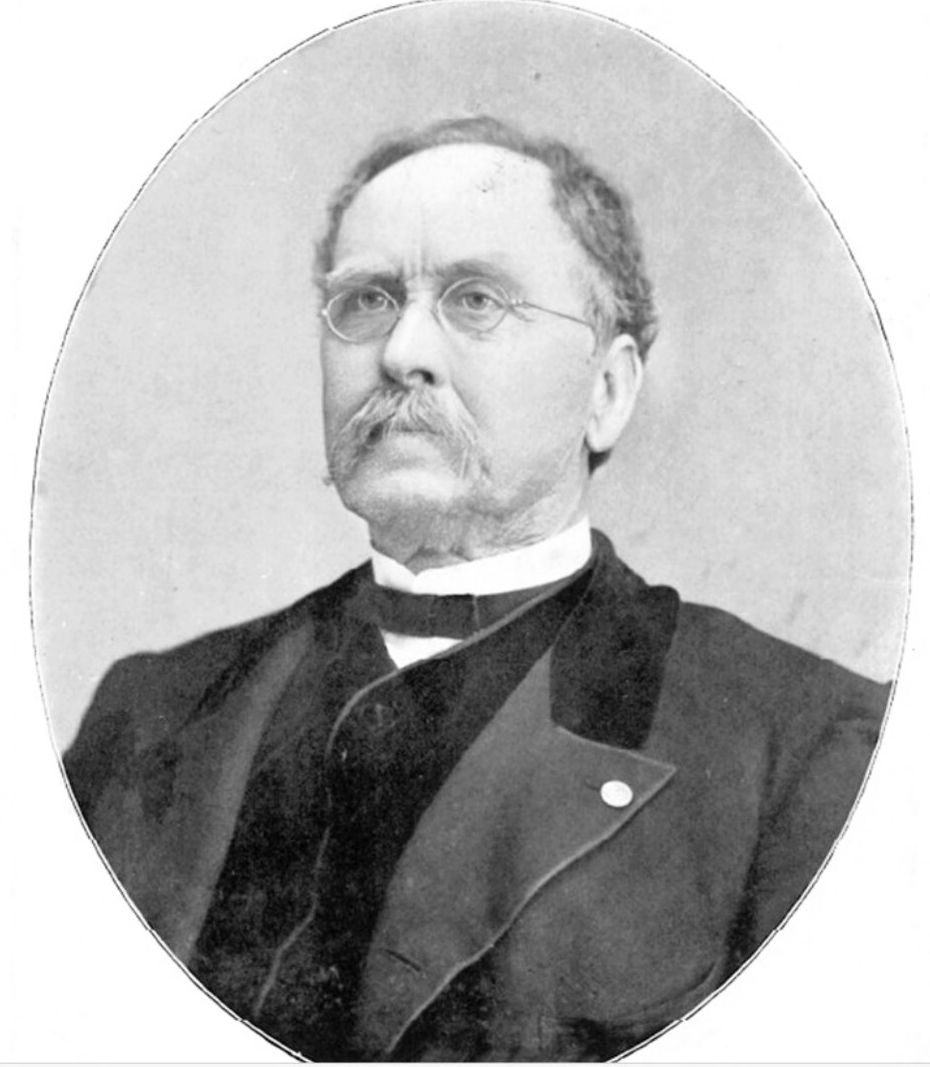
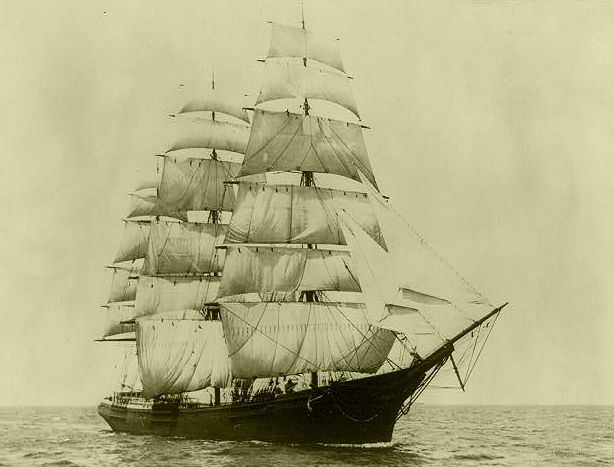
Trip to California, Nimrod Headington’s journal, details his 1852 journey by ship, sailing from New York to San Francisco, to pan for gold. [1] [2]

This is the ninth in a series of blog posts, the transcription of Nimrod Headington’s 1852 journal.

Today’s installment begins the end of May, 1852. They sailed from New York over 95 days before and now their ship is docked at Valparaiso, Chile. Headington is in the city of Valparaiso.

[Late May, 1852] I next visited the cemetery, and this is the manner in which they bury their dead. The common herd of poor class they bury all in one common grave. They dig a hole 40 or 50 foot long and 10 or 12 foot deep, and when one dies, they throw the body in without any coffin and throw just enough dirt on to cover it up. And when another dies, they throw it on top of that and a little more dirt, and so on until that hole is full and then dig another. I saw the legs and arms of several sticking out. In this way hundreds are buried in one common grave while the wealthy class and all foreigners are buried in single graves in coffins.

There are a great many sailors buried here. I noted some of the inscriptions or epitaphs on some of the tombstones:

      To me remains no place nor time.
      My country is in every clime.
      I can be calm and free from care
      On any shore since God is there.

      After many toils and perils past,
      In foreign climes I fell at last.
      Reader, prepare to follow me,
      For what I am you soon must be.

      Ship mates, all my cruise is up.
      My body moored at rest.
      My soul is where? Aloft, of course,
      Rejoicing with the blest.

I found this epitaph on the tomb of an old sea captain, buried here in 1828:

        Here lies the rigging spars and hull
        Of sailing master David Mull

The following lines I found on the tomb of an America lady buried here:

        Light be the turf of thy tomb  
        May its verdure like emerald be.
       
There should not be the shadow of gloom
       
In aught that reminds us of thee.

These lines were inscribed on the tomb of an American Sailor buried in 1840:

        With bounding heart I left my home   
        Not thinking death so near.
       
But here the tyrant laid me low,
       
Which caused a messmate’s tear.

I might have taken many more of the inscriptions, but the day being almost gone, I had to stop and retrace my steps toward the city in order to reach there before dark, as I had some suspicion of these natives, especially in the dark. They all carry their big, dark knives by their side, attached to a belt, and they both fear and hate a Yankee.

Sundays here is their day for sport, horse racing, bull fighting, and all sorts of gambling. A great race was to take place on Sunday while we were there. And as we wanted to see all the sights, we went out to the racecourse. Thousands of people were there. The races were very fine—very fast running horses and piles of money bet on them. After the races were over, two of the men that owned the horses commenced quarreling. They were both mounted on horses, and very soon they drew their revolvers and made a dash at each other. And when the smoke cleared away, both of these men lay dead upon the ground.

For sin and licentiousness Valparaiso excels any city in the world of its size. Even the women are so depraved that they have no shame. 

There was an English Man of War anchored close to our ship while we lay in this port, and on Sunday they sent an invitation to our ship to attend church service on their ship at 4 o’clock p.m. Eight of us in a small boat rowed over to their ship, and we were a little too soon for church. They took great pleasure in showing and explaining everything on their ship. Also their implements of war. They had 36 cannon and large amounts of muskets with glittering bayonets. Everything was very clear and neat and in proper place, much more so than on our ship. It was not long until the bell rang for church, and all hands gathered between decks and were soon seated on benches. The chaplain read the services and prayers, and every word was repeated after him by all the soldiers, sailors, and seamen. Soon the bell tolled again, and the services were ended. The benches were all stowed away, and the brooms were brought out and sweeping commenced. They do not allow a speck of dirt to accumulate in any part of the ship. They invited us to remain to supper with them, and out of curiosity to see how the lived, we accepted their invitation. I did not eat much, for all they had was pilot bread and tea, and the bread was so hard that I could not eat it. They had 260 soldiers on board. Then we left them, they shook hands with us and wished us good luck.

May 31st.  All ready to sail, and when our captain went to the consul to get his clearance papers, he found that someone had filed a petition against allowing the ship to go without being thoroughly cleansed and whitewashed. So he could not get his clearance. We had three doctors on board, and they went to the consul’s office and prevailed on him to issue the clearance, promising that they would have the ship cleaned as soon as she got to sea. The wind blew from off the sea so hard all day that we could not run out. [3]

To be continued…

I will post Nimrod’s journal in increments, but not necessarily every week.

[1] Nimrod Headington (1827-1913) was the son of Nicholas (1790-1856) and Ruth (Phillips) (1794-1865) Headington. He was born in Mt. Vernon, Knox County, Ohio, on 5 August 1827. He married Mary Ann McDonald (1829-1855) in Delaware County, Ohio, in 1849. Nimrod moved to Portland, Jay County, Indiana, by 1860 and a couple years later served in the 34th Indiana Infantry during the Civil War as a Colonel, Lieutenant Colonel, and Major. Nimrod died 7 January 1913 and is buried in Green Park Cemetery, Portland. Nimrod Headington is my fourth great-granduncle, the brother of my fourth great-grandfather, William Headington (1815-1879).

[2] Nimrod Headington at the age of 24, set sail from New York in February 1852, bound for San Francisco, California, to join the gold rush and to hopefully make his fortune. The Panama Canal had not been built at that time and he sailed around the tip of South America to reach the California coast.    

Nimrod Headington kept a diary of his 1852 journey and in 1905 he made a hand-written copy for his daughter Thetis O. Tate. This hand-written copy was eventually passed down to Nimrod’s great-great-granddaughter, Karen (Liffring) Hill (1955-2010). Karen was a book editor and during the last two years of her life she transcribed Nimrod’s journal.

Nimrod’s journal, Trip to California, documents his travels between February of 1852 and spring of 1853.

[3] Nimrod Headington’s journal, transcription and photos courtesy of Ross Hill, 2019, used with permission.

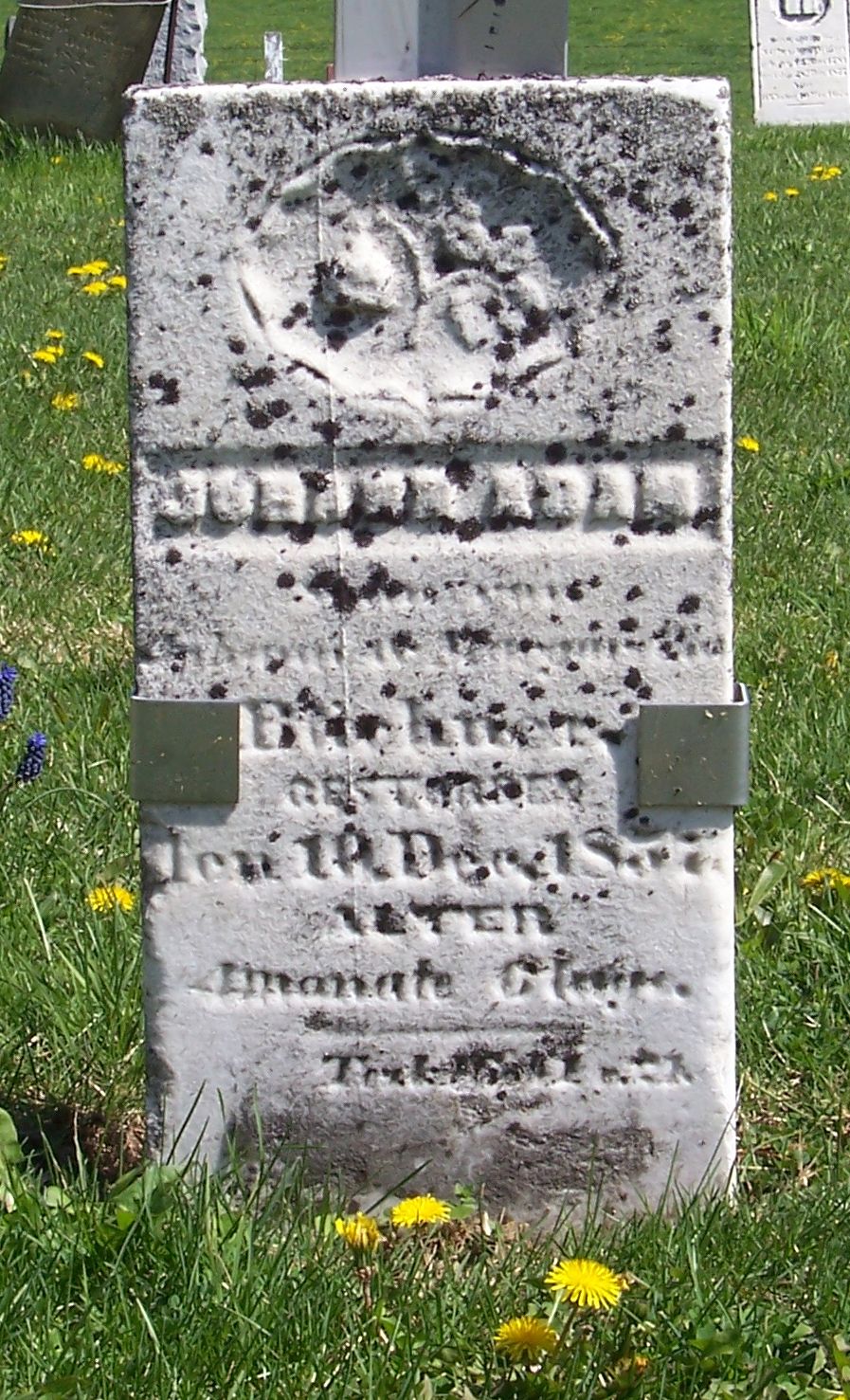
Tombstone Tuesday–Conrad Baals

Conrad Baals, Zion Lutheran Cemetery, Van Wert County, Ohio. (2012 photo by Karen)

This is the tombstone of Conrad Baals, located in row 5 of Zion Lutheran Cemetery, Schumm, Van Wert County, Ohio. The marker is inscribed:

In memory of
CONRAD BAALS
Died
Mar 7, 1889
Aged
71 Y, 7 M, 12 D
BAALS

Johann “Conrad” Baals was born 25 July 1817 in the Kingdom of Bavaria, according to the records of Zion Lutheran Church, Schumm. The name of his hometown looks like Pagenhart in the records, but I cannot find that town in Germany. He immigrated before 1851.

Conrad Baals married Anna Geisler on 6 May 1851 at Zion, Schumm. Both were members of Zion’s parish. Anna was also from Germany.

Three children were born to Anna and Conrad Baals within the next 7 years: George (1854), August (1856), and Mary (1858).

The Conrad Baals family in 1860, living in Willshire Township: Conrad, 40; Anna, 32; George, 6; August, 4; Mary, 2; and Nicholas Geisler, 27. Nicholas Geisler was Anna’s brother. Conrad, Anna, and Nicholas were all born in Bavaria, while the rest were born in Ohio. [1] 

The Conrad Baals family in 1870: Conrad, 53; Anna, 42; George, 16; Augustus, 14; Margaret, 12; Fredrick, 5; and William, 3. [2]

The Conrad Baals family in 1880: Conrad, 62; Anna, 52; George, 26; Augustus, 24; Margaret, 20; Frederick, 17; and William, 12. Conrad and his sons were farmers. [3]

Conrad Baals died of consumption on 7 March 1889, at the age of 71 years, 7 months, and 10 days. He was buried on the 10th.

Conrad Baals, Zion Lutheran Cemetery, Van Wert County, Ohio. (2012 photo by Karen)

It appears Conrad and Anna were close friends and/or neighbors with my great-great-uncle Pankratius Schinnerer and his family. Conrad and Anna named one of their children Pankratius and were the baptismal sponsors for some other Schinnerer children. Pankratius was a brother to my great-great-grandfather Friedrick Schinnerer.

Conrad and Anna (Geisler) Baals had the following children:

Johann “George” Pankratius (1854-1930), never married
Adam Gustav (1856-1903)
Rosina Maria Margarethe (1858-1929), married August Heim
Johann “Friedrich” (1864-)
Johann Wilhelm “William” (1867-1943), married Jennie A. Gershaw Haines; Jennie A. Rison

Conrad’s widow Anna (Geisler) Baals died in Willshire Township on 23 September 1925, at the age of 97. She is buried in row 11 of Zion Schumm Cemetery.  

I do not have much information about the Baals family, although at least two other Baals were mentioned in Zion Schumm’s records. Michael Baals died 4 September 1853 while visiting his brother. His age is not given and his brother’s name is not mentioned. Two children of August and Margaretha Baals were baptized at Zion Schumm in the 1870s, Robert Franklin and Clara Henrietta. Michael and August may have been related to Conrad and Conrad may have been related to some of the Baals who are buried in Concordia Lutheran Cemetery, Fort Wayne, Indiana.

[1] 1860 U.S. Census, Willshire, Van Wert, Ohio, p.424 [stamped], p.147 [penned], dwelling 1051, family 1045, Conrad Baltz; digital image by subscription, Ancestry.com (https://www.ancestry.com/search/collections/7667/ : viewed 14 Mar 2020).

[2] 1870 U.S. Census, Willshire, Van Wert Ohio, p.446B, dwelling 238, family 239, Conrad Balls; digital image by subscription, Ancestry.com (https://www.ancestry.com/search/collections/7163/ : viewed 23 Mar 2020).

[3] 1880 U.S. Census, Willshire, Van Wert, Ohio, ED 154, p.447A [stamped], p.9 [penned], family 78, Z Coomod Bates; digital image by subscription, Ancestry.com (https://www.ancestry.com/search/collections/6742/ : viewed 23 Mar 2020).

Photos Colorized by MyHeritage.com

Today I am taking a break from Nimrod Headington’s accounts of his voyage from New York to San Francisco in 1852.

The past couple weeks have been trying times for all, as we are all asked to do our part and stay at home to help stop the spread of the COVID-19 virus. Joe and I are doing fine here. Actually, we say that our life really hasn’t changed a whole lot during this time. We are not real social creatures and are content to just stay at home most of the time anyway. But this pandemic has taken that to an even higher level. We do like to get out and about a little more than we are doing now, at least for grocery shopping and occasionally dining out.

Now we order most of our groceries on-line at Walmart, for pickup at a specific time the next day, and someone brings the bags to our car. That is a very nice service and works pretty well, although it is somewhat like gambling. We place an order but are never really sure if all the items we ordered will be available the next day. And there may be substitutions.

We had the hardest time getting eggs. I would order eggs but they would be out of eggs by our pickup time the next day. So I decided to order a dozen hard-boiled eggs, to put in with pickled beets. And before you ask, yes, I can boil an egg, I just didn’t have any eggs here. But, instead of a dozen hard-boiled eggs, they gave me 4 eggs. Eventually Joe did get a couple dozen fresh eggs at Chief. We are not going to starve here, although we eat a lot of fresh produce and will need to make a grocery run in about a week. We haven’t really touched our canned and frozen food yet and we have plenty of toilet paper.    

Some of our plans have changed. We cancelled a British Isles cruise we had scheduled for mid-May. That was hard. I had tickets to visit Highclere Castle, where they film the PBS series Downton Abbey. We would have met Lady Carnarvon, who lives there with her husband, the 8th Earl of Carnarvon. I was looking forward to that visit the most, followed closely by touring London and seeing castles and cathedrals in England, Scotland, and Ireland. At this time we don’t know if our Alaska trip will happen later this year.

But those are all minor things. The health of the American people and people all over the world is the most important thing right now. We pray for health, healing, and the end of this pandemic.

Here is something I tried this past week, during my stay-at-home time. A few weeks back MyHeritage.com offered a new service, MyHeritage In Color, that automatically colorizes a black and white photo that you upload. It only takes about 10 seconds for the whole process and the photos look quite nice. I have a DNA subscription at MyHeritage.com, not their Complete Plan, and I was allowed to colorize 10 photos with my plan. But, earlier this week MyHeritage announced that for the next month subscribers that do not have the Complete Plan can colorize as many photos as they want for free. How nice of them to give all their subscribers the opportunity to use this unlimited service at this time!

I decided to take advantage of their offer and below are a few old photos that I uploaded to MyHeritage and were colorized.

Before and after colorization. Brewster reunion.

Brewster Reunion, colorized.

1938 Schumm Parochial School. colorized.

John & Hannah (Huey) Bryan family, colorized.

Uncle Kenny with his 4-H calf, colorized.

Zion Lutheran Church, Schumm, dedication, 1915, colorized.

Schumm sawmill, w/Carl Weinman, colorized.

Rose & Emma Rueck, colorized.

Louis Schumm, c1905, colorized.

Farm animals, Carl Miller farm, colorized.

Phil Brewster family, colorized.

Jackson & Mary Ann (Martin) Brewster, colorized.

Lizzy (Schinnerer) Scaer with grandchildren Mary & Elmer, colorized.

Florence (Schumm) Miller, colorized.

Herbert Miller, colorized.

Be safe everyone and do you part to stop the spread.  

Tombstone Tuesday-Anna (Geisler) Baals

Anna Baals, Zion Lutheran Cemetery, Van Wert County, Ohio. (2012 photo by Karen)

This is the tombstone of Anna (Geisler) Baals, located in row 11 of Zion Lutheran Cemetery, Schumm, Van Wert County, Ohio. The marker is inscribed:

Anna Baals
1828-1925

Anna Geisler was born 19 August 1828 in Germany, according to the records of Zion Lutheran Church, Schumm. She may have been from Gruengraben, Bavaria, where her brother Nichols Geisler was from.

The Geislers immigrated before 1850 and the father was likely Michael Geisler. The Michael Geisler family in 1850, in Willshire Township: Michael, 50; Anna, 21; Nicholas, 18; George, 21; Barbara, 15; and Margaret, 11. Michael Geisler was a farmer and all were born in Germany. [1]

Anna Geisler married Conrad Baals on 6 May 1851 at Zion, Schumm. Both were members of Zion’s parish.

Three children were born to Anna and Conrad Baals within the next 7 years: George (1854), August (1856), and Mary (1858).

The Conrad Baals family in 1860, in Willshire Township, where Anna’s brother Nicholas lived with them: Conrad, 40; Anna, 32; George, 6; August, 4; Mary, 2; and Nicholas Geisler, 27. Conrad, Anna, and Nicholas were all born in Bavaria, while the rest were born in Ohio. [2] 

The Conrad Baals family in 1870: Conrad, 53; Anna, 42; George, 16; Augustus, 14; Margaret, 12; Fredrick, 5; and William, 3. [3]

The Conrad Baals family in 1880: Conrad, 62; Anna, 52; George, 26; Augustus, 24; Margaret, 20; Frederick, 17; and William, 12. Conrad and his sons were farmers. [4]

Anna’s husband Conrad Baals died of consumption on 7 March 1889, at the age of 71 years, 7 months, and 10 days. He is buried in row 5 of Zion Schumm’s cemetery.  

Widow Anna (Geisler) Baals in 1900, living with two of her sons: Anna, 76, head; George, 45, son; and William, 32, son. Anna was born in Germany but no immigration date was given. Anna had given birth to 5 children and all 5 were living. George was single and William was married for 5 years, but there was no wife in the household. They were farmers. [5]

Anna (Geisler) Baals, living with her two sons in Willshire Township, in 1920: John, 52, head, divorced; Anna, 91, mother, widowed; and George, 65, brother, single. John and Goerge farmed. Anna was naturalized in 1853, immigration date unknown. [6]

Anna (Geisler) Baals died 23 September 1925 in Willshire Township, at the age of 97 years, 1 month and 3 days. She was buried on the 25th.

Conrad and Anna (Geisler) Baals had the following children:

Johann “George” Pankratius (1854-1930), never married
Adam Gustav (1856-1903)
Rosina Maria Margarethe (1858-1929), married August Heim
Johann “Friedrich” (1864-)
Johann Wilhelm “William” (1867-1943), married Jennie A. Gershaw Haines; married Jennie A. Rison

[1] 1850 U.S. Census, Willshire, Van Wert, Ohio, dwelling 108, family 124, Michael Geshler; digital image by subscription, Ancestry.com (https://www.ancestry.com/search/collections/8054/ : viewed 14 Mar 2020).

[2] 1860 U.S. Census, Willshire, Van Wert, Ohio, p.424 [stamped], p.147 [penned], dwelling 1051, family 1045, Conrad Baltz; digital image by subscription, Ancestry.com (https://www.ancestry.com/search/collections/7667/ : viewed 14 Mar 2020).

[3] 1870 U.S. Census, Willshire, Van Wert Ohio, p.446B, dwelling 238, family 239, Conrad Balls; digital image by subscription, Ancestry.com (https://www.ancestry.com/search/collections/7163/ : viewed 23 Mar 2020).

[4] 1880 U.S. Census, Willshire, Van Wert, Ohio, ED 154, p.447A [stamped], p.9 [penned], family 78, Z Coomod Bates; digital image by subscription, Ancestry.com (https://www.ancestry.com/search/collections/6742/ : viewed 23 Mar 2020).

[5] 1900 U.S. Census, Willshire, Van Wert, Ohio, ED97, dwelling 211, family 225, Ina Baabs;  (https://www.ancestry.com/search/collections/7602/ : viewed 23 Mar 2020).

[6] 1920 U.S. Census, Willshire, Van Wert, Ohio, ED 146, p.2A, dwelling & family 25, John Baals; digital image by subscription, Ancestry.com  (https://www.ancestry.com/search/collections/6061/ : viewed 23 Mar 2020).

Nimrod Headington Journal, 1852, part 8

Trip to California, Nimrod Headington’s journal, [1] details his journey by ship, sailing from New York to San Francisco, to pan for gold in 1852. [2]

This is the eighth in a series of blog posts, the transcription of Nimrod Headington’s 1852 journal.

Today’s installment begins on 24 May 1852, and they have just dropped anchor off the coast of Chile, near Valparaiso, and are ready to disembark. They had been at sea nearly 95 days.

[24 May 1852] Our ship was soon vacated, for all were anxious to set foot on land once more. I was a little late going ashore, and when I landed, I saw about 20 of our passengers mounted on horses and riding through a whooping and hollering as if trying to frighten the inhabitants of the city. The horses here are not so large as our American horse, but they are very fine and handsome, fine travelers, very great runners. They have their manes all close shaved off and are trained to stop at the least check of the rein, as the riders then all ride with a slack rein. They have very poor saddles. It is nothing but a pad, with stirrup leathers and a large wooden stirrup. Their wagons are all carts and gigs gotten up for one horse only. Their harness is composed of collar and harness and rawhide traces. Bridle bit with a strap tied on the end for a whip. They use no lines. Their mode of driving is for one man, the driver, to ride the horse, not the horse hitched to the gig. That horse he leads by the side of the one he is on. The driver wears a big pair of spurs and spurs the one he rides and applies the whip to the other. These vehicles are only made to carry two persons, and you generally see a gentleman and lady riding in them together.  

The driving is all confined to the city, for there are no roads leading into the city. Nothing but paths made by pack mules, as everything is brought in over the mountains by trains of pack mules.  They even pack all the wood and coal. They have great copper mines not far from the city, and we saw a mule train come in loaded with copper ore in company with three others of the party. I took a tramp out toward the mount, saw several flocks of sheep and lots of mules and horses grazing. It was very short nipping for the poor creatures. For as far as I could see, the sides of these mountains were almost barren. After we had strolled as long as we wanted to, we started back, but not in the same road we had gone out. We soon came to a shanty built of mud, where some persons were engaged skinning a carcass of some kind. When within a few yards of this hut, out came 5 or 6 dogs and came right at us with great ferociousness, but we kept right on and paid no attention to them and came out all right. It was all the way downhill returning to the city, and my knees gave out, and I was very tired and perfectly satisfied with strolling in the mountains of Chile.    

We went to a hotel and called for dinner. I was very hungry as well as tired. After dinner in company with about 20 of our passengers, we took in the sights of the city until evening and then returned to the ship. When we returned to the ship, we found our steward drunk and wanting to fight everybody. Finally he found one as willing as him, and they went at in fine style, and when the fight ended, the steward was not near so handsome as he was before the fight. I went to my quarters and wrote a letter to my wife and the next morning went ashore to place it in the hands of the American consul to be sent on the first vessel leaving that port for New York. I had to pay 56 cents postage on that letter.

That day the wind blew so hard from off the sea and the waves ran so high that we could not get back to our ship and had to stay in the city all night. We went to a hotel, called for supper and lodgings. After supper we sat in the office and chatted with the landlord, who spoke tolerable fair English. About 10 o’clock, we called for our beds and were piloted up a rickety pair of stairs to a room that looked more like a hay mow than a sleeping room. Instead of bedsteads, we had stalls. Instead of feather beds, we had shavings. Our quilts and sheets were all blankets, and instead of sleeping, we had to fight fleas and rats all night. 

The next building to our hotel was a resort for sailors—a terrible hard place and a lot of drunken Devils kept up a howl at night over the door of that place. The next morning I read the following sign:

Come, Brother Sailor,
As you pass
Lend a hand
To steep this mast

This a bad place for earthquakes. In these mountains are continuous burning volcanoes, which break out very often, causing the earth to tremble and quake so that it shakes down their adobe houses. They do not build any other kind of houses, and they are never more than two stories high on account of the oft recurrence of the earthquakes. 

The city of Valparaiso sank in 1836. A man who was there told me all about it. He said in the morning about sunup, the earth began to quake. Some of the houses began to fall, others cracking on all sides, ready to fall any minute. It was not long before another shock still harder than the first and the cry of men, women, and children could be heard in every direction. This shock left but few houses standing, and the falling caused hundreds of deaths. There were a number of shocks during the day. In the afternoon, the earth began to crack open, and water coming up made it evident that the city was sinking. And the inhabitants fled to the hills only a short distance off. In the morning of the next day, the city was out of sight. It had sunk into the sea, and it is probable that our ship was anchored over the spot where the city once stood.

This man related circumstance that happened. There was a young man of his acquaintance at the time who had a beautiful head of black hair on the morning of the earthquake, and at 5 o’clock that same evening, his hair was white as snow from fright. I cannot vouch for this, but I believe the man told the truth.

The next day I visited some of the fine gardens in the city. These are mostly kept up by the French and English inhabitants of that city. They are very fine. All the enterprising people here are foreigners. The natives of this country are a very indolent and slothful race of people as a rule. Ten Americans can command double and triple the wages here that of a native. They tried hard to hire some of our men—blacksmiths and carpenters—offering them five and six dollars per day, but could not persuade any of them to stop off. [3]

To be continued…

I will post Nimrod’s journal in increments, but not necessarily every week.

[1] Nimrod Headington (1827-1913) was the son of Nicholas (1790-1856) and Ruth (Phillips) (1794-1865) Headington. He was born in Mt. Vernon, Knox County, Ohio, on 5 August 1827. He married Mary Ann McDonald (1829-1855) in Delaware County, Ohio, in 1849. Nimrod moved to Portland, Jay County, Indiana, by 1860 and a couple years later served in the 34th Indiana Infantry during the Civil War as a Colonel, Lieutenant Colonel, and Major. Nimrod died 7 January 1913 and is buried in Green Park Cemetery, Portland. Nimrod Headington is my fourth great-granduncle, the brother of my fourth great-grandfather, William Headington (1815-1879).

[2] Nimrod Headington at the age of 24, set sail from New York in February 1852, bound for San Francisco, California, to join the gold rush and to hopefully make his fortune. The Panama Canal had not been built at that time and he sailed around the tip of South America to reach the California coast.    

Nimrod Headington kept a diary of his 1852 journey and in 1905 he made a hand-written copy for his daughter Thetis O. Tate. This hand-written copy was eventually passed down to Nimrod’s great-great-granddaughter, Karen (Liffring) Hill (1955-2010). Karen was a book editor and during the last two years of her life she transcribed Nimrod’s journal.

Nimrod’s journal, “Trip to California,” documents his travels between February of 1852 and spring of 1853.

[3] Nimrod Headington’s journal, transcription and photos courtesy of Ross Hill, 2019, used with permission.