Nimrod Headington Journal, 1852, part 14

Today’s blog post is the fourteenth in a series, the transcription of Nimrod Headington’s 1852 journal, Trip to California.

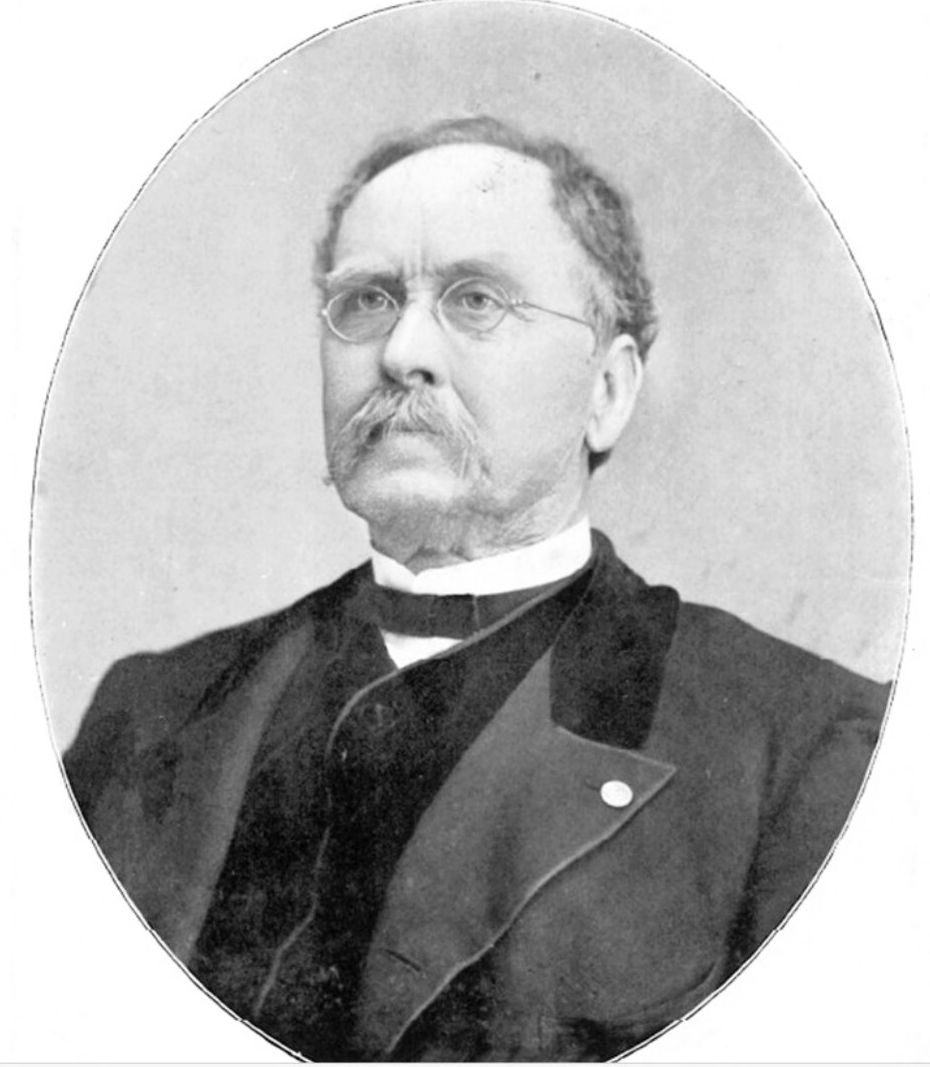
In his journal Nimrod Headington details his voyage from New York to San Francisco, where he would stake his claim and pan for gold. [1] [2]

Their ship, the Race Hound, set sail from New York on 16 February 1852 and rounded Cape Horn during the night of 4 May. Today’s installment begins on 1 July 1852, as their ship sails toward San Francisco.

From Sea to Land

July 1st. This morning after a refreshing sleep on deck, we found our ship sailing very fast, and the sailors said we had been running at that rate all night. About 8 o’clock it commenced to rain and rained for 3 hours very hard. Then it cleared up and the sun came out, so the captain got to take the sun’s altitude. And we found we had been making very fast time for 3 days—the fastest we had ever made. We had run 924 miles in 3 days and nights. We are now in latitude 18° 47’.

July 2nd. I slept on deck again, and it was uncomfortable cool. We passed a ship at 1 o’clock this morning and at daylight were almost out of sight of her. She was going the same way we were. They day was cloudy and very cool. This is very strange in this latitude, as we were almost directly under the sun. On account of clouds, we did not get the sun’s altitude that day. We saw a large shark pass under the bow of our ship that day and went right off from us. It had been a long time since we had seen one. We were then in the northeast Trade Winds, and a shark is very seldom seen here. We were glad to part with him. The Trade Winds are very strong and steady, and we are sailing very rapidly.

July 3rd. The weather continues very cool, and the wind strong and fair. We wet on deck at 4 o’clock to arrange for the celebration of the 4th of July. We appointed a committee of three to select a speaker from among our passengers and to make such other arrangements as was thought proper for the occasion, and the committee after due deliberation decided that as the 4th came on Sunday, we should celebrate on Monday, the 5th.

July 4th. Strong headwinds and very cold for this latitude. It was so cool that we had to go below to sleep. This was very discouraging to us. We had only about 15 degrees to run on a straight line and could make that in 4 days if the wind was from the right direction. We wanted to run north but had to run west, which was carrying us farther off every hour. The steward killed a hog, which was the last hog with 4 legs we had on board. We had duff for dinner today. Duff is a boiled pudding and is served once a week onboard of the ship. Today we are in latitude 24°18’ north.

July 5th. We are heading northwest by west with strong wind and cool weather. At 11 o’clock we assembled on quarterdeck where the chairman, Mr. Shulery called the meeting to order and introduced Mr. Puleifer as the orator of the day. He immediately came forward and commenced his address. He spoke for about an hour. His speech was well prepared. The sailors hoisted a flag on the forward deck with a large dog on it, with these words written on it: Splice the Main Brace. The captain, seeing it, ordered the mate to go and take it down. He obeyed the command, and soon their flag lay upon the deck. After the speaker was through, Mr. Bliss, Mr. Shaw, Mr. Warner, Mr. Eliott, and Mr. Topliff all offered appropriate toasts, and volunteer responses were made. The “Star Spangled Banner” was sung and the crowd dispersed. The stevedores all got drunk and some of the sailors. The officers of the ship kept sober, or we might have had a serious time. This was the coldest 4th or 5th of July I had ever seen, and we were only 2 degrees from under the sun. We are in latitude 26°21’.

July 6th. Our course is northwest, and we are running 10 knots an hour. Nothing special happened during the day. Now in latitude 28°11’.

July 7th. Wind and weather the same. Running 20 knots an hour in latitude 30°14’.

July 8th. We began to get very much discouraged, as the wind was still at our head. The way we are running, it would take us [missing words] to run up to San Francisco, when if we could have fair winds, we could run in 3 days. As is, we are running farther off every minute and no hope of a change that we could see. The weather still very cool in latitude 32°9’.

July 12th. This morning it rained a light shower and then cleared off and was calm all day. This was the first day the sun had shown all day since we crossed the equator, and it was warm enough to be comfortable. We were now in latitude 38°40’, exactly opposite San Francisco but about 800 miles off and in a dead calm, which is not very encouraging.

July 13th. We came out this morning after a refreshing sleep and found we were still in a calm. The sea looked very beautiful; not a ripple could be seen in any direction. Two seabirds were the only objects in sight. At about two o’clock in the afternoon a light breeze set in from the northwest, which was a favorable wind of us, as we wanted to run east immediately. The yardarms were squared, and the [studding sails] were set, and we began to more again toward the promised land.

July 14th.  We had a splendid wind all day that carried us at about 10 knots per hour right on our course, which was east by north. You may guess how good we felt when we got out of a calm. All were in fine glee, thinking we should get to set foot on terra firma once more. The land of promise, which we had for so long a time had been so anxious to see.

July 15th. Wind still continues fair for us, and we are making good headway. The passengers are beginning to gather up their belongings and making preparation for landing. All are engaged in washing and drying their clothing and blankets, so as to have all clean to go on shore. When the captain took the sun’s altitude, he said we were just 11 degrees from San Francisco.

July 16th. Our breeze was light but right to the purpose. At 10 o’clock today we are 27 miles from the city. The baker and the cabin boy had a fight.

July 17th. This morning we have a splendid breeze from the southwest. While at breakfast this morning, someone cried, “Whale!” We went on deck and saw a large tree with limbs and roots all floating on the water. It was supposed to have come down the Sacramento River. All cried, “Land!” on our weather bow, but it proved to be a cloud. And the day passed without seeing land. Very cloudy and cool. [3]

To be continued…

I had to chuckle when I read Nimrod’s comment, “The steward killed a hog, which was the last hog with 4 legs we had on board.” They had been at sea for five months, on what was probably not a large ship. There were undoubtedly some personality conflicts. I love this comment!

The 17th would be their last full day at sea. They will dock in San Francisco the next day.

I will post Nimrod’s journal in increments, but not necessarily every week.

[1] Nimrod Headington at the age of 24, set sail from New York in February 1852, bound for San Francisco, California, to join the gold rush and to hopefully make his fortune. The Panama Canal had not been built at that time and he sailed around the tip of South America to reach the California coast.     Nimrod Headington kept a diary of his 1852 journey and in 1905 he made a hand-written copy for his daughter Thetis O. Tate. This hand-written copy was eventually passed down to Nimrod’s great-great-granddaughter, Karen (Liffring) Hill (1955-2010). Karen was a book editor and during the last two years of her life she transcribed Nimrod’s journal. Nimrod’s journal, Trip to California, documents his travels between February of 1852 and spring of 1853.

[2] Nimrod Headington (1827-1913) was the son of Nicholas (1790-1856) and Ruth (Phillips) (1794-1865) Headington. He was born in Mt. Vernon, Knox County, Ohio, on 5 August 1827 and married Mary Ann McDonald (1829-1855) in Delaware County, Ohio, in 1849. Nimrod moved to Portland, Jay County, Indiana, by 1860 and during the Civil War served in the 34th Indiana Infantry as a Colonel, Lieutenant Colonel, and Major. Nimrod died 7 January 1913 and is buried in Green Park Cemetery, Portland. Nimrod Headington is my fourth great-granduncle, the brother of my fourth great-grandfather, William Headington (1815-1879).

[3] Nimrod Headington’s journal, transcription and photos courtesy of Ross Hill, 2019, used with permission.

Tombstone Tuesday-Maria Catharina Buchner

Maria Catharina Buchner, Zion Lutheran Cemetery, Van Wert County, Ohio. (2012 photo by Karen)

This is the tombstone of Maria Catharina Büchner, located in row 4 of Zion Lutheran Cemetery, Schumm, Van Wert County, Ohio. The marker is inscribed:

MARIA CATHARINA
Tochter von
Johann & Margarethe
BÜCHNER
Gestorben
Den 12 Jan. 1858
Alter
3 Jahre, 11 mo, 15 tag

Maria Catharina, daughter of Johann & Margarethe Büchner, died 12 Jan. 1858, aged 3 years, 11 months, and 6 days.

There is no birth/baptism record for Maria Catharina in Zion Schumm’s records. There is only her death record. According to her death record Maria Catharina Büchner was the daughter of John Büchner [and his wife Anna Margarethe “Margaret” (Scior/Zior)].

Zion Schumm’s records and Van Wert County Probate marriage records indicate that the parents, John Büchner and Margaret Scior, married on 21 April 1853. Both were German immigrants.

Maria Catharina’s date of birth would be 28 January 1854, as calculated from the church record. She was likely the first child born to the couple. 

Maria Catharina Büchner died 12 January 1858, at the age of 3 years, 11 months, and 15 days.

She is buried next to her brother John Adam Büchner.

Her father John Büchner died in 1896 and her mother Margaret died in 1907 and are both buried in row 6 of Zion Schumm’s cemetery.

John and Margaret (Scior) Büchner had the following children, although this list may not be complete:

Maria Catharina (1854-1858)
Johann Adam (1857-1857)
Wilhelm (1859-1926), not married
Maria (1861-1930), married Friedrich Schumm Jr
John (1865-1933), married Louisa Lillich
Henry (1867-1931), married Rosa Lillich

Nimrod Headington Journal, 1852, part 13

Today’s blog post is the thirteenth in a series, the transcription of Nimrod Headington’s 1852 journal, Trip to California.

In his journal Nimrod Headington details his voyage from New York to San Francisco, where he would stake his claim and pan for gold. [1] [2]

Their ship, the Race Hound, set sail from New York on 16 February 1852 and rounded Cape Horn during the night of 4 May. Today’s installment begins on 27 June 1852, as they continue to sail toward San Francisco.

Nimrod Headington (1827-1913)

June 27th. Sunday morning I was up early and went forward under poop deck to take a saltwater bath, as the water was warm and the day was pleasant after a hard rain last night. The air was very pure now, this being the sabbath and almost a calm. Everything seemed to quiet, and almost everyone had a book in their hand—even the sailors, who on every Sabbath before that but one could be heard cursing and swearing. Cursing their God and the contrary winds often to such an extent that it was enough to chill the blood of anyone possessing a soul to hear them. We saw a shark that day, but it was some distance off and going the opposite direction. We were glad of it for none of us wanted to supply his hungry belly.

June 28th. This morning just as I went on deck, two men on top of the [gella] got into a fight, and it was about the worst fist fight I looked at. They were both big, strong men, and they fought for 5 minutes or more. Both badly pounded and was blood all over.

June 29th. We are having strong winds and showers of rain and sudden gales and squalls. Continued all day. It was so cloudy and stormy that the captain could not take the second altitude to determine what latitude we were in.

Last night there were several large birds gathered around the ship. These birds were about the size of a goose and of a brown color. The sailors called them boobies. They are sleepy, lazy kind of bird, and they fall asleep as soon as they light. They had scarcely settled down when the sailors had hold of them and brought them on deck. But they did not hurt them and let them go again. They consider it bad luck to kill a bird of any kind on the sea. There were other birds around the ship called the men of war. They are a white bird and about the same size of the booby, they did not light. There are but two sea fowls that ever light on a ship—the booby and the albatross. The latter is a white bird with black spots on their wings, web footed, and the largest bird of all.

June 30th. We had a very bad storm last night. I thought one time we were going to go down. Several of the passengers rolled out of their berths. But fortunately the storm did not last but a couple of hours. Hard rain began to pour down, and that had a tendency to still the troubled waters. I attempted to sleep on a bench near the hatchway, but it was so awful hot that I could not sleep. Besides, I had not laid there but a short time until the bench capsized and I was laying on the floor. I picked myself up and went up on deck and spent the night there, where I could get a good breath. When daylight came, the wind shifted to the northwest, and we made a rapid run. It rained very often all that day.

While we were at breakfast this morning, someone on deck cried, “Sail, ho.” When we came up on deck, we saw the masts of a vessel supposed to be about 6 miles off our bow, heading the same way we were. But she was running double reef topsails and mainsails with [topgallent] sails furled. Making very slow time. We were running under [studding] sails with our [topgallant] sails and [royal] sails all set. It was not more than 2 hours from the time we first sighted her until we were out of sight. [3]

To be continued…

I will post Nimrod’s journal in increments, but not necessarily every week.

[1] Nimrod Headington at the age of 24, set sail from New York in February 1852, bound for San Francisco, California, to join the gold rush and to hopefully make his fortune. The Panama Canal had not been built at that time and he sailed around the tip of South America to reach the California coast.     Nimrod Headington kept a diary of his 1852 journey and in 1905 he made a hand-written copy for his daughter Thetis O. Tate. This hand-written copy was eventually passed down to Nimrod’s great-great-granddaughter, Karen (Liffring) Hill (1955-2010). Karen was a book editor and during the last two years of her life she transcribed Nimrod’s journal. Nimrod’s journal, Trip to California, documents his travels between February of 1852 and spring of 1853.

[2] Nimrod Headington (1827-1913) was the son of Nicholas (1790-1856) and Ruth (Phillips) (1794-1865) Headington. He was born in Mt. Vernon, Knox County, Ohio, on 5 August 1827 and married Mary Ann McDonald (1829-1855) in Delaware County, Ohio, in 1849. Nimrod moved to Portland, Jay County, Indiana, by 1860 and during the Civil War served in the 34th Indiana Infantry as a Colonel, Lieutenant Colonel, and Major. Nimrod died 7 January 1913 and is buried in Green Park Cemetery, Portland. Nimrod Headington is my fourth great-granduncle, the brother of my fourth great-grandfather, William Headington (1815-1879).

[3] Nimrod Headington’s journal, transcription and photos courtesy of Ross Hill, 2019, used with permission.


Tombstone Tuesday-Johann Adam Buchner

Johann Adam Buchner, Zion Lutheran Cemetery, Van Wert County, Ohio. (2012 photo by Karen)

This is the tombstone of Johann Adam Büchner, located in row 4 of Zion Lutheran Cemetery, Schumm, Van Wert County, Ohio. The marker is inscribed:

JOHANN ADAM
Sohn von
Johann & Margarethe
BUCHNER
Gestorben
Den 10 Dec 1857
Alter
4 monate, 6 tage

Johann Adam, son of Johann & Margarethe Buchner, died 10 December 1857, age 4 months, 6 days.

Johann Adam Büchner was born 4 August 1857, the son of Johann “John” and Anna Margarethe “Margaret” (Scior/Zior) Buchner. Johann was baptized at home on 9 August 1857, with Adam Büchner and Adam Dietrich and wife serving as his sponsors.

Zion Schumm’s records and Van Wert County Probate marriage records both indicate that the parents, John Büchner and Margaret Scior, married on 21 April 1853. Both were German immigrants.  

Their son, Johann Adam Büchner, died 10 December 1857, age 4 months and 6 days. No cause of death was given.

The father John Büchner died in 1896 and the mother Margaret died in 1907. Both buried in row 6 of Zion Schumm’s cemetery.

John and Margaret (Scior) Büchner had the following children, although this list may not be complete:

Maria Catharina (1854-1858)
Johann Adam (1857-1857)
Wilhelm (1859-1926), not married
Maria (1861-1930), married Friedrich Schumm Jr
John (1865-1933), married Louisa Lillich
Henry (1867-1931), married Rosa Lillich

Nimrod Headington Journal, 1852, part 12

Today’s blog post is the twelfth in a series, the transcription of Nimrod Headington’s 1852 journal, Trip to California.

In his journal Nimrod Headington details his voyage from New York to San Francisco, where he would stake his claim and pan for gold. [1] [2]

Nimrod Headington (1827-1913)

Their ship, the Race Hound, set sail from New York on 16 February 1852 and rounded Cape Horn during the night of 4 May. Today’s installment begins on 23 June 1852, the day after the longest day of the year, when they crossed the Equator. They continued sailing northward.

Nimrod writes about the conditions on the ship:

June 23rd. Breeze from the south very light but so steady that it took us on our course. The day was clear and very hot. I went up on masthead and sat and read all day. In the evening the sailors gathered on poop deck and had a dance, and they all got drunk, and they carried on all night so that we got no sleep for their noise. The mate being sick was all of our dependence. This captain was afraid of those wicked wretches, and they were wanting a chance to kill him as they had a grudge against him for some of his cruel treatment of them. Some time before when they were all sober—and if they had have tackled him, there would not have been much mercy shown him from the passengers, for he had treated us all badly by not giving us enough to eat or to drink. We were promised when we left New York that we should all fare alike in first and second cabin—that our provision should be the same. But before we were out a week, there was a material difference in the grub, which kept up a row all the time. Before we were out 20 days, we were passed our allowance of water, which was only one quart for each man a day; however, as small as this quantity appears, I never suffered for water at any time during the voyage. As we did not have much exercise, but little water was required. But worst of all, the water got so bad before we could reach a port to get fresh water again. The water smelled so bad that we would do without just as long as we could, for the smell was enough to set one to vomiting. We kept haunting the captain until we got fresh bread baked every morning instead of hard tack, which was so hard that no man could eat it without grinding first.

June 24th. This morning had every appearance of a good day for us. The wind was strong and fair, and we were making fine headway when all of a sudden about 10 o’clock black clouds came up from the northeast and soon overshadowed us. And in a few minutes, the rain fell in torrents for about 2 hours, when it ceased and a favorable breeze struck up again. Before this, I had been sleeping on a deck for about a week. But when this rain came, we all had to go below, where we suffered for want of air. But the showers being short, we were soon on deck again. It was too cloudy to get the sun’s altitude. We could not tell what latitude or longitude we were in.

June 25th. The morning appeared very pleasant, but we had several showers of rain during the day. All being well, we were all merry, and some of them got a little too merry. Six or eight of our men got on a spree and showed off a little. They made so much noise that the captain came on deck and ordered them to go forward, but they drove the captain to his quarters in a quick time. And when they had as much fun as they wanted, they got quiet and went to bed.


That night we came in sight of the North Star—which was the first time we had seen it since leaving north latitude on the Atlantic 87 days before! When I saw it, I resolved that I would never go out of sight of it again. The sun and moon began to rise and set in their proper places again, and things began to appear natural again. We had never been used to looking north for the sun before. Neither had we used to having two summers and two winters in the same year. But we have seen them this year. We have felt the burning heat of the sun a second time at the equator and felt the sleet and snow a second time. Leaving New York in the winter, we encountered another winter on rounding the cape, and a severe winter more so than on land on account of the velocity of the wind. A voyage on the high sea is the place to try the courage of men and to learn their disposition. Some men during storms would go below and crawl into bed and cover up head and heels to keep from witnessing the awfulness of a storm at sea. Some would pray with all their might. Some would not leave the deck while the storm lasted. For my part, I was always among the latter and could never sleep during a storm no matter how long it lasted. I always watched the old hands. As long as I could not see that they were alarmed, I felt that we would come out all right.

Now we have been 20 days without the least appearance of a storm or a calm, which is very pleasant after coming around the cape through so many storms and gales of wind and the dangers of going ashore or on some hidden rock or island—all of which the sea is full of around the end of the cape. We are now in latitude 5°40’, longitude 100°11’ west, thermometer 85°.

June 26th. We had a ten knot breeze last night and this morning until 4 o’clock, when it began to rain. The wind full, and it is almost calm until 12 o’clock, when a light breeze set in from the northwest. We were then in latitude 7°18’, longitude 111° west. [3]

To be continued…

I will post Nimrod’s journal in increments, but not necessarily every week.

[1] Nimrod Headington at the age of 24, set sail from New York in February 1852, bound for San Francisco, California, to join the gold rush and to hopefully make his fortune. The Panama Canal had not been built at that time and he sailed around the tip of South America to reach the California coast. Nimrod Headington kept a diary of his 1852 journey and in 1905 he made a hand-written copy for his daughter Thetis O. Tate. This hand-written copy was eventually passed down to Nimrod’s great-great-granddaughter, Karen (Liffring) Hill (1955-2010). Karen was a book editor and during the last two years of her life she transcribed Nimrod’s journal. Nimrod’s journal, Trip to California, documents his travels between February of 1852 and spring of 1853.

[2] Nimrod Headington (1827-1913) was the son of Nicholas (1790-1856) and Ruth (Phillips) (1794-1865) Headington. He was born in Mt. Vernon, Knox County, Ohio, on 5 August 1827 and married Mary Ann McDonald (1829-1855) in Delaware County, Ohio, in 1849. Nimrod moved to Portland, Jay County, Indiana, by 1860 and during the Civil War served in the 34th Indiana Infantry as a Colonel, Lieutenant Colonel, and Major. Nimrod died 7 January 1913 and is buried in Green Park Cemetery, Portland. Nimrod Headington is my fourth great-granduncle, the brother of my fourth great-grandfather, William Headington (1815-1879).

[3] Nimrod Headington’s journal, transcription and photos courtesy of Ross Hill, 2019, used with permission.