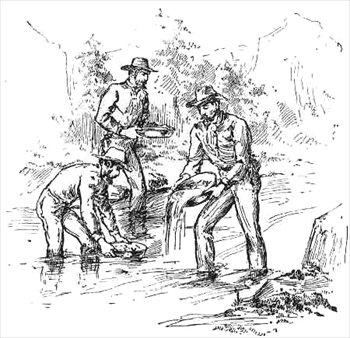
Nimrod Headington, After the Gold Rush

Last week’s blog post was the final installment of Nimrod Headington’s 1852 journal, Trip to California. Nimrod was a young man in his mid-twenties when he returned from California.  What did Nimrod do after he returned from his gold rush adventure in 1853? What did he do the rest of his life?
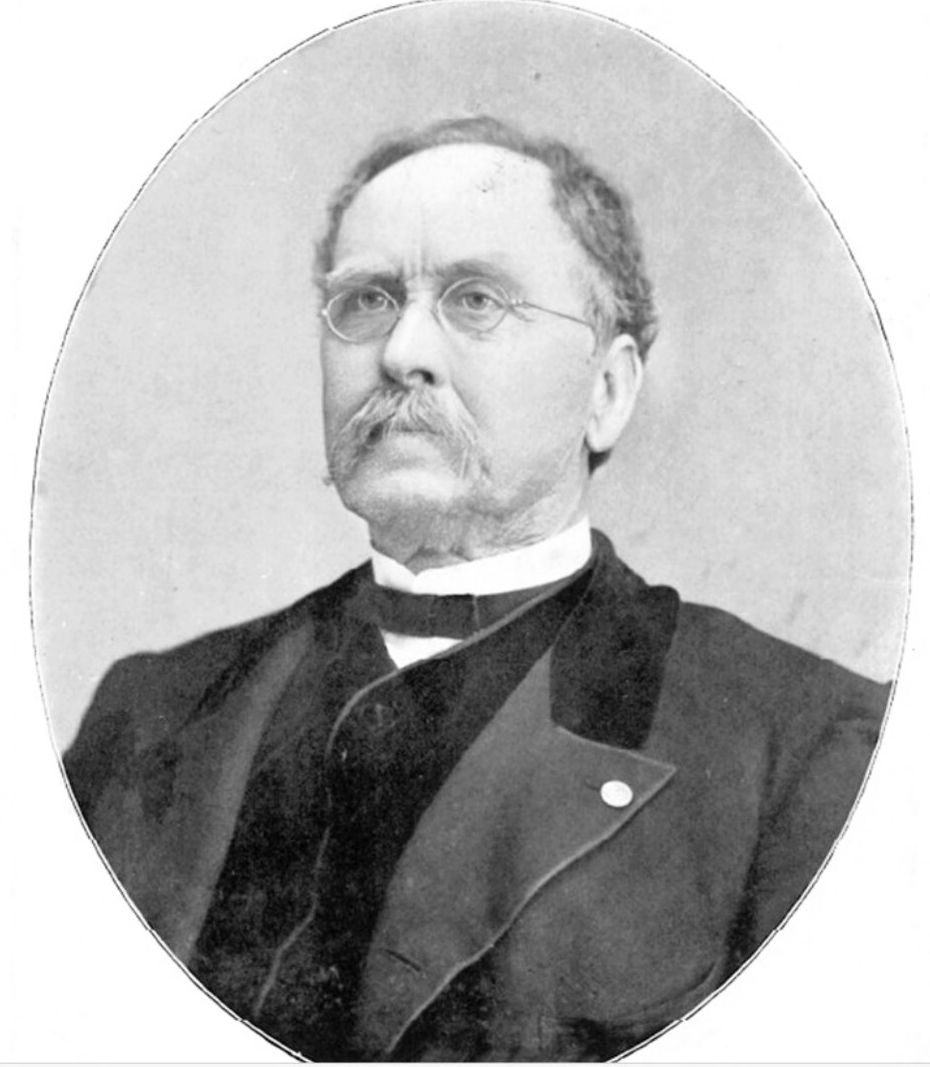
Nimrod Headington (1827-1913)

Nimrod returned to his home and family in Ohio after sailing back from California. He had been away for nearly two years, away from his wife Mary Ann (McDonald) and two children, Charles and Thetis. Years later, in 1905, he made a copy of his California journal for his daughter Thetis.

Nimrod and his family moved to Jay County, Indiana, around 1853 and his wife died there 24 December 1855. She is buried in Liber Cemetery, Wayne Township.

Nimrod married Rebecca (Shank) Hawkins in Jay County, Indiana, on 15 September 1856. [1] Rebecca was previously married to Nathan Hawkins and had several children from her first marriage. Her husband Nathan died in 1853.

In 1860 Nimrod and Rebecca and their children resided in Wayne Township, Jay County, Indiana: Nimrod Headington, 35; Rebecca Headington, 41; Charles F Headington, 10; Thetis O Headington, 6; Hilinda H Hawkins, 17; Nancy AM Hawkins, 14; Rachael H Hawkins, 11; Sarah G Hawkins, 9; Nathan B Hawkins, 7; and John J Hawkins, 23. [2]

Nimrod fought for the Union in the Civil War and earned the rank of Colonel.

The Nimrod Headington family in 1870, where Nimrod and Rebecca operated the Headington House Hotel in Portland: Nimrod Headington, 43, Ohio; Rebecca Headington, 51, Pennsylvania; Charles Headington, 19, Ohio, clerk in drug store; Thetis O Headington, 16, Indiana; John J Hawkins, 32, Indiana, law student; Sarah G Hawkins, 19, Indiana; Nathan B Hawkins, 17, Indiana, clerk in store; Minnie Gillum, 3, Indiana; Isaac Silvernale, 25, Bavaria, dry goods merchant; Catharine Isenhart, 18, Indiana, servant; William H Hart, 23, Illinois, hardware merchant; Edward H Brown, 16, Ohio, clerk in hardware store; George Swisher, 18, Ohio, clerk in furniture store; Henry Ruth, 29, Ohio, photograph artist; and George Rush, 22, Tennessee, hostler. [3]

Nimrod’s second wife Rebecca (Shank) Headington died 1 April 1880 and is buried in Green Park Cemetery, Portland, Indiana.

Nimrod and his children in 1880: Nimrod, 53, widower, keeping hotel; Minnie, 13, daughter, at school; Maggie Senters, 24, servant; Sarah Mead, 19; servant; George Rush, 28, servant; Edward Murthey, 24, servant. [4]

Nimrod married Ruth Ann (Haines) Watson on 6 April 1881. Ruth was previously married to Joseph Watson. [5]

The Nimrod and Ruth in 1900: Nimrod Headington, 72, fire insurance agent; Ruth Headington, 69, living on Main Street in Portland. Ruth had not given birth to any children. [6]

Nimrod and Ruth in 1910: Nimrod, 82; Ruth, 79, residing on West Walnut Street in Portland. [7]

Nimrod Headington died of apoplexy in Portland on 7 January 1913, at the age of 85. He was buried in Green Park Cemetery, Portland, on 10 January. His death certificate indicates he was born in Knox County, Ohio, to Nicholas and Ruth (Philips) Headington, both of Maryland. [8]

Nimrod’s widow Ruth died 4 February 1915 at the age of 84. [9] Nimrod and Ruth did not have any children.

The following is Nimrod’s biographical sketch, published in 1901.

Colonel Nimrod Headington was born in Mt. Vernon, Ohio, in 1827, and has lived in Portland, Indiana, since 1853. In September, 1861, he, with James W. Campbell, raised a company for the war of the Rebellion, which was assigned to the Thirty-fourth Indiana Infantry, and on its organization he was elected first lieutenant, and a year and a half later promoted to captain, his commission bearing date April 10, 1863. He was later commissioned major of his regiment, and January 3, 1865, lieutenant-colonel. He was mustered out February 21, 1866, his entire time of service being four years and five months. Colonel Headington participated in the battle of Baker’s Creek, or Champion Hills, where he was in command of his company, which lost seventeen men, killed and wounded, the entire division losing fifteen hundred men. Then followed the siege of Vicksburg, in which his regiment took an important part, and after the fall of Vicksburg moved on Fort Jackson, and thence to New Orleans, and participated in the Tesch campaign in Louisiana. Soon after this campaign they were sent via New Orleans to Matagorda Bay, and thence up the Rio Grande River four hundred miles to Ringgold Barracks, where their last duty was performed. Colonel Headington had many narrow escapes from rebel bullets during his long term of service, but his health became impaired, and for number of years following his discharge he was a continual sufferer from the effects of his army service.

In 1870 the Colonel built the Headington House, which he conducted twelve years. He was appointed postmaster in 1878, and served seven years. The faithfulness with which he discharged his duties as postmaster is indicated by the fact that at the end of his service his accounts were examined and it was found that he was indebted to the department nine cents, for the payment of which he holds a receipt. He is now engaged in the real estate and insurance business. In 1857 and 1858 he was surveyor of Jay County. Politically the Colonel is a Republican. He was reared a Democrat, but the firing on the nation’s flag at Fort Sumter changed his politics.

Colonel Headington was first married November 6, 1849, to Mary McDonald, by whom he had two children: Charles F., who is a member of the firm of Cartwright & Headington, and Thetis O., now the widow of the late Charles T. Tate. The mother died January 24, 1855. He was again married in September, 1858, [sic] to Rebecca Hawkins, who died April 1, 1880. His present wife was Mrs. Ruth A. Watson, daughter of William Haines. [10]

Soon I will post Nimrod’s complete journal on a static page on Karen’s Chatt, so it will be easier to read in its entirety.

[1] “Indiana Marriages, 1811-2007,” Vol. B:269, Nimrod Headington & Rebecca Hawkins, 14 Dec 1856; FamilySearch.org (https://www.familysearch.org/ark:/61903/3:1:9392-C91D-B?i=154&cc=1410397&personaUrl=%2Fark%3A%2F61903%2F1%3A1%3AV6RP-1CL : viewed 22 Jul 2020)

[2] 1860 U.S. Census, Wayne, Jay, Indiana, p.147, dwelling, family, Nimrod Headington; digital image by subscription, Ancestry.com (https://www.ancestry.com/search/collections/7667/ : viewed 25 Jun 2008).

[3] 1870 U.S. Census, Wayne, Jay, Indiana, p.187, dwelling 221, 220, Nimrod Headington; digital image by subscription, Ancestry.com (https://www.ancestry.com/search/collections/7163/  : viewed 9 Jun 2008).

[4] 1880 U.S. Census, Portland, Jay, Indiana, ED 155, p.424C, dwelling & family 29, Nimrod Headington; digital image by subscription, Ancestry.com (https://www.ancestry.com/search/collections/6742/ : viewed 22 Jul 2020).

[5] “Indiana Marriages, 1811-2007,” Vol. E:165, Nimrod Headington & Ruth A Watson, 6 Apr 1881; FamilySearch.org (https://www.familysearch.org/ark:/61903/3:1:9392-HT9F-T6?i=110&cc=1410397&personaUrl=%2Fark%3A%2F61903%2F1%3A1%3AV6RP-WBW : viewed 22 Jul 2020).

[6] 1900 U.S. Census, Portland, Jay, Indiana, ED 74, p.6, dwelling & family 148, Nimrod Headington; digital image by subscription, Ancestry.com (https://www.ancestry.com/search/collections/7602/ : viewed 22 Jul 2020).

[7] 1910 U.S. Census, Portland Ward 1, Jay, Indiana, ED 80, p.3A, dwelling 65, family 66, Nimrod Headington; digital image by subscription, Ancestry.com (https://www.ancestry.com/search/collections/7884/ : viewed 22 Jul 2020).

[8] Indiana, Death Certificates, 1899-2011, Year 1913, roll 9, Nimrod Headington, 7 Jan 1913; digital image by subscription, Ancestry.com.

[9] Indiana, Death Certificates, 1899-2011, Year 1910-1919, roll 9, Ruth A Headington, 4 Feb 1915; digital image by subscription, Ancestry.com.

[10] Biographical Memoirs of Jay County, Indiana, (Chicago:  B.F. Bowen Co., Publishers, 1901), 300-1.

Tombstone Tuesday-Aaron H. & Mildred A. (Steinbauer) Buechner

Aaron H. & Mildred A. Buechner, Zion Lutheran Cemetery, Van Wert County, Ohio. (2012 photo by Karen)

This is the tombstone of Aaron H. and Mildred A. (Steinbauer) Buechner, located in row 9 of Zion Lutheran Cemetery, Schumm, Van Wert County, Ohio. The marker is inscribed:

BUECHNER
Aaron H.
1899-1987
Mildred A.
1910-2007

Aaron Hugo Buechner was born in Van Wert County, Ohio, on 5 March 1899, the son of William A. and Katherine M. (Schumm) Buechner. He was baptized at Zion Schumm on 19 March 1899, with Hugo A. Schumm and Ludwig Schinnerer serving as his sponsors.

The William and Katherine Buechner family in 1900, six years after their marriage: William A, 34; Katherine, 26; Anna M, 3; Aaron H, 1; Barbara A Buechner, 77, [William’s mother]; and William Dock, 23, servant. William Buechner was a farmer. [1]

The William Buechner family in 1910: William, 45; Katherine, 36; Aaron, 11; Paula, 9; Alma, 2; and Ida Stamm, 25, servant, doing housework. [2]

The William Buechner family in 1920: William A, 54; Katharine M, 45; Aaron H, 20; Paula H, 19; and Alma B, 12. [3]

The William Buechner family in 1930: William A, 64; Katherine, 56; Aaron H, 31; and Alma B, 22. [4]

Aaron Buechner married Mildred A. Steinbauer on 21 April 1938. They were married in Fort Wayne by Rev. Paul F. Miller. Aaron was a farmer near Willshire. Mildred resided in Fort Wayne, where she worked as a clerk. [5]

Mildred Alberta Steinbauer was born 10 August 1910 near Convoy, Van Wert County, Ohio, the daughter of Henry Ernst and Martha Marie (Bauer) Steinbauer.

The Henry Steinbauer family in 1920: Henry, 44; Martha, 36; Gertrude, 13; Paul, 11; Mildred, 9; Herbert, 6; and Lillian, 4. The family lived at 608 S. Walnut in Van Wert and the father Henry worked for the railroad. [6]

The Steinbauer family moved to Fort Wayne, Indiana, sometime within the next 10 years. In 1930 Henry Steinbauer and his family lived at 2332 Oliver Street: Henry, 54; Martha M, 46; Gertrude, 23; Paul T, 21; Mildred, 19; Herbert, 17; Lillian, 14; and Frank Gamec, 21, lodger. Mildred worked as an accountant at an insurance company. Her father Henry worked as a janitor in a railroad office. [7]

The Aaron and Mildred Buchner family in 1940, two years after their marriage: Aaron H, 41; Mildred A, 29; Catherine L, one month; Betty Schumm, 19, servant. Aaron was a farmer. [8]

Aaron Buechner died at the Lutheran Home in Fort Wayne on 31 December 1987 from carcinomatosis. He was buried on 4 January 1988. [9]

Mildred (Steinbauer) Buechner died in Albany, New York, on 9 April 2007. She was buried on the 17th. From her obituary: …For nearly 30 years, she sewed comforters from donated fabrics for distribution by Lutheran World Relief, some years producing more than 100. She was active in the Valparaiso University Guild and the Lutheran Women’s Missionary League and in women’s groups at Zion Lutheran Church of Schumm, OH, Bethlehem Lutheran Church of Ft. Wayne and St. Matthew Lutheran Church of Albany…

Aaron and Mildred (Steinbauer) Buechner had two daughters:
Catharine Louise, married Richard Andino
Elizabeth Ann, married Jerry Weiss

[1] 1900 U.S. Census, Willshire, Van Wert, Ohio, ED 98, p.11, dwelling 219, family 224, William A Buechner; digital image by subscription, Ancestry.com (https://www.ancestry.com/search/collections/7602/ : viewed 11 Jul 2020)

[2] 1910 U.S. Census, Willshire, Van Wert, Ohio, ED 114, p.6A, dwelling 114, family 115, William Buechner; digital image by subscription, Ancestry.com (https://www.ancestry.com/search/collections/7884/ : viewed 11 Jul 2020).

[3] 1920 U.S. Census, Willshire, Van Wert, Ohio, ED 146, p.2A, dwelling & family 34, William A Buchner; digital image by subscription, Ancestry.com (https://www.ancestry.com/search/collections/6061/ : viewed 11 Jul 2020). 

[4] 1930 U.S. Census, Willshire, Van Wert, Ohio, ED 24, p.5A, dwelling 94, family 96, William A Buechner; digital image by subscription, Ancestry.com (https://www.ancestry.com/search/collections/6224/ : viewed 11 Jul 2020).

[5] “Indiana Marriages, 1811-2007,” Allen Co. Marriages, Vol 91:529, Aaron Hugo Buechner & Mildred Alberta Steinbauer, 21 Apr 1938; database with images, FamilySearch.org (https://www.familysearch.org/ark:/61903/3:1:S3HT-DYZ3-5N8?i=273&cc=1410397&personaUrl=%2Fark%3A%2F61903%2F1%3A1%3AXXV6-V8V : viewed 18 Jul 2020).

[6] 1920 U.S. Census, Van Wert Ward 4, Van Wert, Ohio, ED 134, p.1A, dwelling & family 10, Henry Steinbauer; digital image by subscription, Ancestry.com (https://www.ancestry.com/search/collections/6061/ : viewed 18 Jul 2020).

[7] 1930 U.S. Census, Fort Wayne, Allen, Indiana, ED 44, p.14B, dwellin 305, family 337, Henry Steinbauer; digital image by subscription, Ancestry.com (https://www.ancestry.com/search/collections/6224/ : viewed 18 Jul 2020).

[8] 1940 U.S. Census, Willshire, Van Wert, Ohio, ED 81-28, p.5B, house 104, Aaron H Bueckner; digital image by subscription, Ancestry.com (https://www.ancestry.com/search/collections/2442/ : viewed 8 Jul 2020).

[9] Indiana, Death Certificates, 1899-2011, Year 1987, Aaron H. Buecher, 31 Dec 1987; database on-line, Ancestry.com.

Nimrod Headington Journal, 1852, part 22

This is the final installment of the transcriptions of Nimrod Headington’s 1852 journal, Trip to California.

In his journal Nimrod Headington details his 1852 voyage from New York to San Francisco and his search for gold in California. [1] [2]

Nimrod, with several others from Knox County, Ohio, set sail from New York on 16 February 1852, traveling on the clipper ship Racehound. After 5 months at sea, on 18 July 1852, they docked at San Francisco and shortly afterward Nimrod began his search for gold in California.

Nimrod Headington (1827-1913)

Today’s blog post begins in early July 1853. After panning for gold for nearly a year, Nimrod is ready to head back to Ohio. Nimrod’s story continues:

Leaving the Claim for Home
A fellow came along that had some money and wanted to buy into our company. The thought of waiting for another season for snow to make water stared me in the face. And the thought of the hardships that we had during the last winter and the thought of my wife and little boy at home all came up before me. And I sold out to the fellow and bade Moffitt and Bunce good-bye after a couple of days, which I had to stay to settle up some business. I had a partner that I hated to leave. Moffitt was the soul of honor—honorable and upright in everything and always in good humor.

On the 7th day of July, I had to go over the Table Mountain about 5 miles to see a man that owed me some money. And I traveled over snow on the north side of the mountain that was perhaps 20 foot deep. The snow never goes off on the north side of Table Mountain.

On the 8th of July I started for San Francisco on a mule, along with the American Express train. The first night on our way, we stopped at a ranch, and the room that I was in had two beds in it. Sometime in the night, the fellow in the other bed came to my bed. I was awake with my revolver in my hand. I asked him what he wanted, and he said that he was cold and wanted to get in bed with me. I punched him with my revolver, and he jumped about 6 foot back and begged me not to shoot. I told him to crawl into his bed and lay very still. If he attempted to get up again, I would shoot him. He layed down and was perfectly still the rest of the night. The next morning he apologized for coming to my bed, and I let him off. But I am sure he wanted my gold dust.

Nothing further happened to mar my peace on the way to San Francisco. When I arrived at the city, I went and got me a new suit of clothing. And after a bath, I donned them and then looked in the glass to see if it was really me, as I had been in rags and dirt for so long. I then went to the office of the steamship company and purchased my ticket for New York. The ship was not due to leave for two days. So I had a chance to see all the sights of the city.

On the sixteenth of July 1853, I went on board the ship Brother Jonathan, and at 3 o’clock we weighed anchor and passed out through the Golden Gate. Soon after starting, I noticed a rather roughly dressed and sickly looking fellow watching me. But I did not think much about it, and when we had gotten outside the harbor, I was standing with my arm around a bannister, looking down into the water. And this fellow came up on the other side of the banister and stood there a moment. And I thought to draw him out a little, and I remarked to him that this was a pretty rough sea. And he said, “Yes.” The [he] said to me, “Ain’t your name Headington?” He startled me. He had great big tears in his eyes, and I had not heard my name called, except by my partners while in California. He said to me, “Don’t you know me?” I told him I did not. He said, “I am Monroe Stark.”

We left New York on the Race Hound together. He had two uncles with him, and they were among the party that left our ship at Rio de Janeiro and went on board the ship Prince do Johnville. And they were shipwrecked someplace on the South American coast. His two uncles died, and he managed to get on some other ship that took him to San Francisco. I set down, and he told me how unfortunate he had been and how long he had been sick. I did not ask him how he got his ticket to New York, but he had a ticket. And after hearing all, I took him to my room and gave him a new suit of underclothes, and when we got to the isthmus, I bought him a transit ticket, which entitled him to a mule to ride instead of having to foot it—a distance of 20 miles. And when we landed in New York, I gave him money to buy him a good suit of clothes.

He had some friends in New York that he called on, and the next day we started for home. His father and my father lived in sight of each other. His father was a well-to-do farmer, and they were nice people. And in a day or two after arriving at my father’s house, for that had been the home of my wife and little boy while I was gone, the father and mother of young Stark came over to see me and handed all the money I had paid out and given to their son and thanked me so kindly for all I had done for him. I never told the circumstances in the neighborhood, and nobody knew that Monroe Stark came home with plenty of money.

I want to relate a few things that happened on our voyage home when we dropped anchor at Rio del Sud, which means St. John’s of the South. There being no piers at that port, ships are compelled to anchor out in the bay, and passengers are taken partway to shore in small boats. When within wading distance, we were met by hundreds of naked natives, which we had to pay a quarter to ride on of them to shore or wade out. Almost all paid their money and took a ride. I rode a little yellow, sickly looking individual that I could have picked up and threw him up and thrown him over an eight-rail fence with ease. But the little fellow landed me on shore all right. It was a laughable sight to see some fine-haired New York ladies squirming at the sight of those naked natives and them having to ride one of the ashore. But we were in Rome and had to do what Rome did.

When we landed on the isthmus, there were perhaps a thousand mules and ponies, all having saddles and bridles on. And all we had to do was to take our pick out of the bunch. I found a pretty fair-looking horse, and I mounted him. I was not more than seated in the saddle when a native came running up. I said, “Quanto?” and he answered, “Treis cincopaco”—fifteen dollars. There was a great clamor [over] who could get the best mule or horse, and some of the party would start out just as fast as the poor animals could run. And by the time they got halfway across, their mules would give out, and they had to leave them and walk, while those that took it slow on the start got along fine until we got within two miles of Virgin Bay. And then all of a sudden, we started pell-mell, and it was best fellow to reach the town first.

A man by the name of Farmer from Vermont that rode a sorrel pony distanced all the rest of us and [made] the town first. We went into that town whooping and hollering at a rate that would frighten a big town, let alone a few bamboo shacks. A steamer was in waiting to take us across Nicaragua Lake and down the river of the same name. We went down the river on Sunday, and if we seen one alligator, we seen a thousand, all laying on the sand close to the edge of the water with mouths wide open. Nearly every man on board had a revolver, and a constant fire was kept up all the way down the river.

We landed at San Juan del Norte, which in English is St. John’s of the North. Now we are at the ship Star of the West, one of the finest steamers that ever floated upon the ocean. In four days we sighted and on the East Coast of Cuba. And in eleven days, we landed at pier no. 28, New York.

The foregoing is copied from my diary that I kept on my trip to California and is given to my daughter, Mrs. Thetis o. Tate.

Very respectfully submitted,
Nimrod Headington
April 1st, 1905  [3]

This is the final installment of Nimrod Headington’s 1852 Journal, Trip to California. I hope you have enjoyed this interesting and historical account of a mid-19th century Ohioan who sailed from the east coast to the west coast and back, around Cape Horn, to pan for gold in California. What an adventure!

As several of you have commented, Nimrod was quite a story-teller.

[1] Nimrod Headington at the age of 24, set sail from New York in February 1852, bound for San Francisco, California, to join the gold rush and to hopefully make his fortune. The Panama Canal had not been built at that time and he sailed around the tip of South America to reach the California coast.     Nimrod Headington kept a diary of his 1852 journey and in 1905 he made a hand-written copy for his daughter Thetis O. Tate. This hand-written copy was eventually passed down to Nimrod’s great-great-granddaughter, Karen (Liffring) Hill (1955-2010). Karen was a book editor and during the last two years of her life she transcribed Nimrod’s journal. Nimrod’s journal, Trip to California, documents his travels between February of 1852 and spring of 1853.

[2] Nimrod Headington (1827-1913) was the son of Nicholas (1790-1856) and Ruth (Phillips) (1794-1865) Headington. He was born in Mt. Vernon, Knox County, Ohio, on 5 August 1827 and married Mary Ann McDonald (1829-1855) in Delaware County, Ohio, in 1849. Nimrod moved to Portland, Jay County, Indiana, by 1860 and during the Civil War served in the 34th Indiana Infantry as a Colonel, Lieutenant Colonel, and Major. Nimrod died 7 January 1913 and is buried in Green Park Cemetery, Portland. Nimrod Headington is my fourth great-granduncle, the brother of my fourth great-grandfather, William Headington (1815-1879).

[3] Nimrod Headington’s journal, transcription, and photos courtesy of Ross Hill, 2019, used with permission.

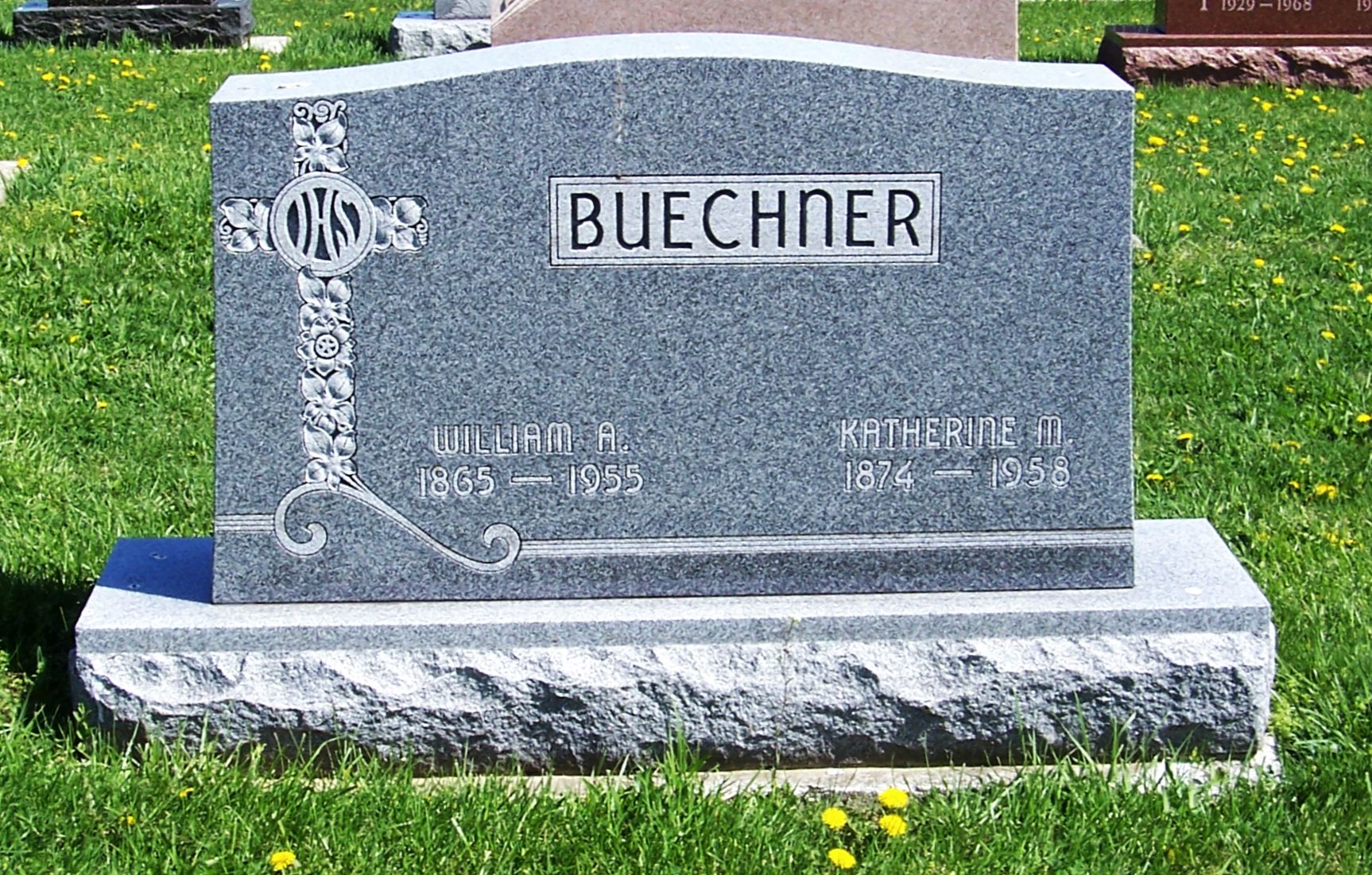
Tombstone Tuesday-William A. & Katherine M. (Schumm) Buechner

William A. & Katherine M. (Schumm) Buechner, Zion Lutheran Cemetery, Van Wert County, Ohio. (2012 photo by Karen)

This is the tombstone of William A. and Katherine M. (Schumm) Buechner, located in row 5 of Zion Lutheran Cemetery, Schumm, Van Wert County, Ohio. The marker is inscribed:

BUECHNER
William A.
1865-1955
Katherine M.
1874-1958

Adam Michael “William” Buechner was born shortly after midnight on 27 June 1865, according to Zion Schumm’s records. He was the second child born to John “Adam” Buechner and his second wife Maria Barbara (Pflueger) Schumm. Maria Barbara (Pflueger) was the widow of immigrant Ludwig Schumm (1817-1855).

William Buechner was baptized 2 July 1865, with Adam Dietrich, Michael Pflueger, and William Schumm serving as his sponsors.

The Adam Buechner family in 1870: Adam, 48; Barbara, 47; John; Rosina, 22; Hannah, 17; Jacob, 11; Frederick, 9; Margaret, 6; and William, 4. The parents were born in Germany and the children were all born in Ohio. The father Adam Buechner was a farmer. [1]

The Adam Buechner family in 1880: Adam, 58; Barbara, 58; John, 30; Margaret, 16; and William M A, 14. [2]

William’s father Adam Buechner died in 1885.

William Buechner married Katherine Schumm on 29 April 1894 at Zion Schumm.

“Katherine” Magdalena Schumm was born 5 March 1874, the second child born to Friedrich Schumm Jr and his first wife Margaret (Ehrenmann). Katherine was baptized on 8 March 1874, with Katharina Stamm, Katharina ___ [?] (standing in for Fr. Schumm), and Magdalena Schumm serving as her sponsors.

The Friedrich Schumm Jr family in 1880, residing on the family farm in Black Creek Township: Friedrich, 35; Margaret, 33; Katherine, 6; Hugo, 4; Leona, 2; and Henrietta, 10 months. [3]

The married couple, William and Katherine Buechner in 1900, six years after their marriage: William A, 34; Katherine, 26; Anna M, 3; Aaron H, 1; Barbara A Buechner, 77, [William’s mother]; and William Dock, 23, servant. William Buechner was a farmer. [4]

Their oldest child Anna Margaretha died in 1901.

The William Buechner family in 1910: William, 45; Katherine, 36; Aaron, 11; Paula, 9; Alma, 2; and Ida Stamm, 25, servant, doing housework.  [5]

The William Buechner family in 1920: William A, 54; Katharine M, 45; Aaron H, 20; Paula H, 19; and Alma B, 12. William’s occupation was farmer. [6]

The William Buechner family in 1930: William A, 64; Katherine, 56; Aaron H, 31; and Alma B, 22. [7]

William Buechner died 13 October 1955 and was buried on the 15th. William’s obituary:

BUECHNER
William A. Buechner, 90, a retired farmer of Willshire Township in the Schumm community, died at 5:10 o’clock this morning in the home of his daughter, Mrs. Walter Allmandinger, in Willshire Township following a year’s illness.

Mrs. [sic] Buechner was born in Willshire Township June 27, 1865. His parents were Adam and Barbara (Pflueger) Buechner. His marriage to Katherine Schumm was on April 29, 1894.

Survivors are his wife; a son Aaron H. Buechner of Willshire Township; two daughter, Mrs. Allmandinger and Mrs. Henry J. Moellering of Fort Wayne and five grandchildren.

A daughter, Anna, a sister, five half-brothers and three half-sisters are deceased.

Funeral services will be held at 1:30 p.m. Saturday at the Allmandinger home, and at 2:30 p.m. at the Zion Lutheran Church at Schumm, of which he was a member. Rev. Hans Wiedenmann will conduct the service. Burial will be in the church cemetery.

The body, now at the Zwick Funeral Home in Decatur, Ind., will be removed to the Allmandinger home Friday and friends may call after 2 p.m. A request to omit flowers has been made. [8]

His widow Katherine (Schumm) Buechner died 25 June 1958.

William and Katherine (Schumm) Buechner had the following children:
Anna Margaretha (1897-1901)
Aaron Hugo (1899-1987), married Mildred Steinbauer
Paul Henrietta (1901-2004), married Walter L. Allmandinger
Alma Barbara (1907-1998), married Henry James Moellering

[1] 1870 U.S. Census, Willshire, Van Wert, Ohio, p.439A, dwelling 134, family 135, Adam Buechner; digital image by subscription, Ancestry.com (https://www.ancestry.com/search/collections/7163/ : viewed 11 Jul 2020).

[2] 1880 U.S. Census, Willshire, Van Wert, Ohio, ED 154, p. 450C, family 130, Adam Beichner; digital image by subscription, Ancestry.com (https://www.ancestry.com/search/collections/6742/ : viewed 11 Jul 2020).

[3] 1880 U.S. Census, Black Creek, Mercer, Ohio, ED 179, p.333B, line 31, Fredone Schuman; digital image by subscription, Ancestry.com (https://www.ancestry.com/search/collections/6742/ : viewed 15 Jun 2020).

[4] 1900 U.S. Census, Willshire, Van Wert, Ohio, ED 98, p.11, dwelling 219, family 224, William A Buechner; digital image by subscription, Ancestry.com (https://www.ancestry.com/search/collections/7602/ : viewed 11 Jul 2020)

[5] 1910 U.S. Census, Willshire, Van Wert, Ohio, ED 114, p.6A, dwelling 114, family 115, William Buechner; digital image by subscription, Ancestry.com (https://www.ancestry.com/search/collections/7884/ : viewed 11 Jul 2020).

[6] 1920 U.S. Census, Willshire, Van Wert, Ohio, ED 146, p.2A, dwelling & family 34, William A Buchner; digital image by subscription, Ancestry.com (https://www.ancestry.com/search/collections/6061/ : viewed 11 Jul 2020). 

[7] 1930 U.S. Census, Willshire, Van Wert, Ohio, ED 24, p.5A, dwelling 94, family 96, William A Buechner; digital image by subscription, Ancestry.com (https://www.ancestry.com/search/collections/6224/ : viewed 11 Jul 2020).

[8] William A. Buechner obituary, Van Wert Times Bulletin, Van Wert, Ohio, 13 Oct 1955, p.16; digital image by subscription, Ancestry.com, viewed 11 Jul 2020.

Nimrod Headington Journal, 1852, part 21

This is the twenty-first in a series, the transcription of Nimrod Headington’s 1852 journal, Trip to California.

In his journal Nimrod Headington details his 1852 voyage from New York to San Francisco and his search for gold in California. [1] [2]

Nimrod, with several others from Knox County, Ohio, set sail from New York on 16 February 1852, traveling on the clipper ship Racehound. After 5 months at sea, on 18 July 1852, they docked at San Francisco and shortly afterward Nimrod began his search for gold in California.

Today’s blog post begins in February 1853, as Nimrod and his partners continue their search for gold. Nimrod has been panning for gold for seven months but has not struck it big yet. Some major obstacles have been the heavy snow, the weather, and the terrain. Nimrod’s story continues:

February 24th. A party of six of us started out on a bear hunt. When we got to the dividing ridge, we divided our company 3 and 3, and a part went up to the table rock, thinking old bruin was laying up there asleep. The 3 that I was with struck out north, as we supposed we would catch the bear running away from the other three. But we were lost and did not know it until we came out at a pine grove, which was just 2 miles north of our cabins and claims. And we struck for home, and this ended our bear hunt.

February 25th. Last night the snow commenced falling again, and it snowed without ceasing for 24 hours and then cleared off again. This storm created considerable excitement among the merchants, as they had all layed in supplies of provisions at a remarkable low price. And in consequence of the storm setting in so sudden, they thought they were going to make a fortune off of the miners right off. But the weather changed to very warm all of a sudden and they felt very much disappointed.

Sunday morning came, and it was warm and pleasant. But on account of the last snow that had fallen 4 foot, there was very little stir. We were informed that there was to be preaching at the cabin of Mr. O’Brien, and we all went but Jake Hardaker. But we had been wrongly informed, and we returned home. While we were gone, Jake had prepared a fine big duff for dinner, had it smoking hot, and a nice dip made of sugar, flour, and water. And we had a royal feast on that Sabbath Day.

February 29th. Monday. We went to work and the weather was very fine and pleasant all that week. When we came to divide the dust Sunday morning, we had sixty dollars each for our week’s work.

March 7th. We were engaged in cleaning out the ditch. We worked until noon, when it commenced to snow again very hard. So we had to quit, and when we panned out, we had sixteen dollars.

At two o’clock that day, we were summoned to attend a trial. A fellow had stolen some specimens of gold and some jewelry from a Mrs. Trigaskins. A jury of miners were soon impaneled and the man was tried and found guilty and sentenced to 36 lashes on the bare back and to leave the diggings as fast as his legs would carry him. He was tied to a large tree, but they did not take off his shirt or pants. The man that done the whipping gave him 12 lashes, then stopped a minute, then gave him 18 more and stopped again, then gave him 6 more, and then turned him loose. And he was soon out of sight. He would tell no one what his name was.

This morning it commenced to rain, and it continued that day and the greater part of the next day. So we did not work but 3 days that week on account of the storms.

March 20th. Our occupation was about the same as last week and attended with very poor success. When we came to divide, we only had one hundred and five dollars for all four of us, and we had to pay 22 dollars for water. This only left us $21 apiece.

March 21st. Worked hard all day. Three of us and only got fifteen dollars and had to pay $6 for water. Worked until noon and quit. Gave up the ditch, satisfied that there was nothing in it that would pay us. And that afternoon McCafferty, Moffit, and myself went and bought out 2 men that were working a claim close to us. Their names were McKeever and Bryan, and we paid them six hundred dollars all down, and they started the next day for Australia.

The next day I went to work on one of the claims with 2 other hands, and I got $20 and fifty cents. McCafferty worked on the other claim with two hands and got twelve dollars.

The next day I worked with some hands, and I got thirty-one dollars, and McCafferty got eighteen. The next day we had to move the [torm] and did not get to work until afternoon. I got eighteen and McCafferty nineteen dollars.

Sunday, March 22nd. Rained all day and the next day, so that we had to stay in the cabin. This gave us a good chance to wash our shirts and to patch our trousers and darn our old socks. And in this way we spent the time. Flour is now worth $22 per hundred, beef 25 cents per pound. We began to fatten up a little and felt better.

March 30th. Weather is fine. We shoveled snow until noon. Washed in the afternoon. I got $16 and Mack got $18. Next day I got $19 and Mack $18. The next [day] I got $26 and Mack $19. The next day I got $36 and Mack $20.

Sunday, April 3rd. The day was very fine, and all nature seemed to spring forth. And [I] clap these hands at the appearance of spring, as I had been working hard all the week. I was glad to see Sunday come to rest my weary body and limbs.

Sunday, April 11th. This week we worked four days, and we got four hundred and ninety dollars. The express train came in just at night, and I hastened to the post office, thinking to hear from home and friends, but was disappointed again and came back feeling sad on account of it. But when Monday morning came and we went at our work again, dull care had soon vanished.

On Sunday, April 25th, Mr. John McCafferty was taken sick very suddenly and grew worse every hour until the following Saturday, when he died at eleven o’clock that night. The next morning Mr. Moffitt and myself procured some rough boards and, with the help of Mr. Morrison, made a rough coffin. And at 2 o’clock on Sunday, we carried the body about ¼ of a mile where some of our neighbor miners had kindly prepared a grave, where we deposited the body without any ceremonies.

Mr. McCafferty had a son-in-law Myron Bunce, who took charge of his effects and stepped into his place as a partner with Moffitt and myself.

From the first of May 1853 to the first of July, we had good weather and made use of it until the water began to give out. And we made pretty fair [wages] in that short time. [3]

To be continued…

Nimrod’s panning for gold was finally paying off. He mentions that his share of gold the last week in February was $60, which would be about $2000 today. Nimrod and his partners were finding gold but I wonder how much profit they really made after paying their expenses.

I will post Nimrod’s journal in increments, but not necessarily every week.

[1] Nimrod Headington at the age of 24, set sail from New York in February 1852, bound for San Francisco, California, to join the gold rush and to hopefully make his fortune. The Panama Canal had not been built at that time and he sailed around the tip of South America to reach the California coast.     Nimrod Headington kept a diary of his 1852 journey and in 1905 he made a hand-written copy for his daughter Thetis O. Tate. This hand-written copy was eventually passed down to Nimrod’s great-great-granddaughter, Karen (Liffring) Hill (1955-2010). Karen was a book editor and during the last two years of her life she transcribed Nimrod’s journal. Nimrod’s journal, Trip to California, documents his travels between February of 1852 and spring of 1853.

[2] Nimrod Headington (1827-1913) was the son of Nicholas (1790-1856) and Ruth (Phillips) (1794-1865) Headington. He was born in Mt. Vernon, Knox County, Ohio, on 5 August 1827 and married Mary Ann McDonald (1829-1855) in Delaware County, Ohio, in 1849. Nimrod moved to Portland, Jay County, Indiana, by 1860 and during the Civil War served in the 34th Indiana Infantry as a Colonel, Lieutenant Colonel, and Major. Nimrod died 7 January 1913 and is buried in Green Park Cemetery, Portland. Nimrod Headington is my fourth great-granduncle, the brother of my fourth great-grandfather, William Headington (1815-1879).

[3] Nimrod Headington’s journal, transcription, and photos courtesy of Ross Hill, 2019, used with permission.