1907: Traction Line Planned for Chatt

Chattanooga, Ohio, was founded a little before 1840. It was and still is a very small town. Some might call it a hamlet. It hasn’t grown much over the years.

A state highway runs through it and there are no side streets. It is a one-road town, bounded by two roads, Strable Road and Tama Road.

At one time there were a number of businesses in the town, including a bank, a couple grocery stores, a saloon, a post office, sawmill, garage, a hardware and implement store, and several other businesses over the years. Today there is a restaurant and two churches. The town saw a little boom in the late 1890s and early 1900s when there was oil drilling in the area.
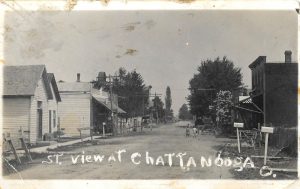
1912 picture postcard of Chattanooga, Ohio.

I have heard that a railroad was expected to go through Chatt years ago. The 1978 History of Mercer County states that a train from Bluffton, Indiana, to Celina was planned to go through Chatt, but that the train got only as far as Geneva. Whether this was to have been a steam train or an interurban electric train, I do not know. That was the only Chatt train story I had heard until recently, when I read this 1907 newspaper article about yet another train bound for Chatt, a traction/electric train:

THE SURVEYORS ARE AT WORK
And the Springfield & Ft. Wayne Traction Line Will be Extended Without Delay

With a view of extending the line from Decatur, Ind., to Celina, via Pleasant Mills, Willshire and Chattanooga, the Springfield & Ft. Wayne Railroad Co. has a surveying party now going over the route. It is estimated that the cost of the extension will be $600,000, of which about $400,000 has been guaranteed. This means that the towns of Rockford, Mercer, Mendon, Neptune and St. Marys will not be touched by the line, although a route including the latter towns would be more feasible and better paying one than the one the Company contemplates adopting.

However, if the people along the route including these towns would raise the required amount of money there is no doubt that this route would be adopted. The company does not ask the money as a donation but will issue stock in the road for the amount subscribed. The portion of the road now in operation is doing fine only 25 per cent of the receipts being required to operate it. This shows that it is under conservative management, and for the towns of Rockford, Mercer, Mendon, Neptune and St. Marys to lose sight of this opportunity of getting an electric road means that the probability of being compelled to ride from one town to another in the “old spring wagon” for years to come is very favorable.

Obviously, that railroad, an interurban line, was never built in Chatt. Going from Willshire to Celina via Chatt is not the most direct route, although it would have been a nice means of transportation for the Chatt locals. I don’t think this interurban ever made it to Willshire or any of the other towns mentioned.   

The Fort Wayne & Springfield Railway Company was incorporated in 1903. Grading was completed from Fort Wayne to Decatur in 1905 and the first car ran in December 1906. Regular service between Fort Wayne and Decatur started 1 February 1907. The rails ended at five points in Decatur. After some major flood-damage in 1913-1915, the line was sold and became the Fort Wayne-Decatur Traction Company.

The Interurban was a type of electric railway with streetcar-like electric rail cars, used primarily for passenger travel between cities and their surrounding rural communities. The cars also ran within the cities and towns. They were prevalent in North America between 1900 and 1925, before most people owned automobiles.

In the early 1900s most roads and many town streets were unpaved. Transportation and hauling was done by horse-drawn carriages and carts, which was often inadequate in rural areas. Steam railroads made limited stops, mostly in towns. The interurban provided reliable transportation between town and rural areas and offered the possibility of increased business. Interurban railways were popular in Indiana, Ohio, Pennsylvania, Illinois, Iowa, Utah, and California. Although they started mainly as passenger carriers, many survived as freight railways after passenger their service ceased.

An interesting little story in Chatt’s history.

Sources:

“The Surveyors Are at Work, Sidney Daily News, Sidney, Ohio, 29 May 1907, p.6; Newspapers.com.

Fort Wayne & Springfield Railway Station, Decatur, IN, published by lumbricus, 2011; Waymarking.com, viewed 30 Nov 2022.
Tombstone Tuesday-Frederick & Anna K. (Kallenberger) Allmandinger

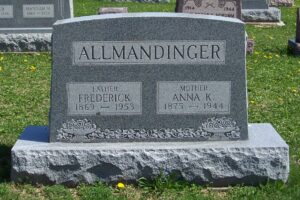
Frederick & Anna K (Kallenberger) Allmandinger, Zion Lutheran Cemetery, Van Wert County, Ohio (2012 photo by Karen)

This is the tombstone of Frederick Allmandinger, located in row 2 of Zion Lutheran Cemetery, Schumm, Van Wert County, Ohio. The marker is inscribed:

ALLMANDINGER
Father
Frederick
1869-1953

Mother
Anna K.
1875-1944

Frederick Allmandinger was born in Butler County, Ohio, on 12 Sep 1869, the son of John Lewis (1829-1988) and Rosina (Schneider/Snyder) (1833-1915) Allmandinger.

The Lewis Allmandinger family in 1870, residing in Wayne, Butler County, where they had a Jacksonburg post office address: Lewis, 40; Rosina, 36; Lewis, 12; Michael, 11; John, 8; Jacob, 6; William, 3; Frederick, 8 months. The father Lewis was a farmer. [1]

By 1880 the Lewis Allmandinger family had moved to Black Creek Township, Mercer County. Their family in 1880: Lewis, 51; Rosina, 46; Lewis, 23; Michael, 22; John, 17; Jacob, 15; William, 12; Frederick, 10; Mary, 8; and Lena, 6. [2] The Allmandingers attended Zion Lutheran Church in Chattanooga, Ohio, also where his future wife attended church.

Friedrich Allmandinger married Anna Katharine Kallenberger on 8 January 1895 at the Kallenberger residence. William Allmandinger and Elisabeth Margarethe Kallenberger were witnesses to the marriage.

The bride Anna Katharina Kallenberger was born in Mercer County, Ohio, on 14 November 1875, the daughter of Andreas (1830-1914) and Elisabeth (Burkhart) (1841-1935) Kallenberger. Anna was baptized 4 May 1876, with her parents and Christ Heintz serving as her sponsors. Her father Andreas was born in Germany.

The Andrew Kallenberger family in 1880: Andrew, 50; Elizabeth B, 39; Christena, 14; Andrew M, 9; Margaret E, 5; and Anna C [K], 4. The father Andrew was a farmer. [3]

Five years after their 1895 marriage, Frederick and Anna (Kallenberger) Allmandinger resided in Black Creek Township with their two children, living very close or next to Anna’s parents. The Frederick Allmandinger household in 1900: Fred, 30; Anna, 24; George F, 4; and Paulena, 1. Frederick farmed. [4] They resided in the same place in 1910 and had three additional children by that time, Rudolf B, 7; Carl M, 4; and Elizabeth, 2. [5]

The Frederick Allmandinger family moved to Liberty Township, Van Wert County, in 1911 and another daughter, Matilda, was born about that same time. The family in 1920: Fred, 56; Anna, 46; George, 24; Paulena, 21; Rudolf, 16; Carl, 14; Elizabeth, 12; and Matilda, 9. [6]

By 1930 only two children were living at home with Frederick and Anna, George, 34, and Matilda, 29. [7] Only son George, 44, lived at home with Frederick, 70, and Anna, 65, in 1940. [8]  

Wife Anna (Kallenberger) Allmandinger died in Van Wert County of cancer on 2 October 1944. She was 68 years old and was buried on the 5th. [9]

In 1950 widower Frederick Allmandinger, 80, lived with daughter Elizabeth and her husband Harold Geissler and their 2 children, Donald N, 20, and Lela Ann, 4. [10]

Frederick Allmandinger died of pancreatic cancer at the Adams County Hospital, Decatur, on 6 December 1953. He was 84 years old and had been ill for less than a year. He was buried on the 9th. [11]

Frederick’s obituary:

Frederick Allmandinger
Willshire-Services will be at 2:30 p.m. Wednesday for Frederick Allmandinger, retired Willshire Township farmer, who died Sunday in Adams County Memorial Hospital, Decatur, Ind.

Services will be in the Zion Lutheran Church, at Schumm, with the Rev. Werner Kuhlberg officiating. Burial will be in the church cemetery.

Mr. Allmandinger was born Sept. 12, 1869, near Hamilton and had lived in the Willshire community since 1911.

Surviving are three daughters and three sons: Karl of Celina, Ridolph [sic], of Willshire, George Allmandinger and Mrs. Harold Giessler, of Ohio City, Mrs. Herbert Merkle, Van Wert, and Mrs. Herman Schaekel, Decatur. [12]

Frederick and Anna (Kallenberger) Allmandinger had the following children:
George Frederick (1895-1961)
Paulena Katharine (1898-1988), married Herbert D Merkle
Rudolf Benjamin (1903-1993), married Lula Anna Scare
Karl Michael (1905-1984), married Chloa Estella Smith
Elizabeth M (1907-1972), married Harold Alfred Giessler
Matilda Rebecca (1910-2009), married Herman William Schaekel

[1] 1870 U.S. Census, Wayne, Butler, Ohio, p.491B, dwelling 78, family 75, Lewis Allmandinger; Ancestry.com.

[2] 1880 U.S. Census, Black Creek, Mercer, Ohio, ED 179, p.323A, line 38, Lewis Allmanding [sic]; Ancestry.com.

[3] 1880 U.S. Census, Black Creek, Mercer, Ohio, ED 179, p.327, line 24, Andrew Kallenberger; Ancestry.com.

[4] 1900 U.S. Census, Black Creek, Mercer, Ohio, ED 74, p.8, dwelling & family 165, Fred Alma [sic]; Ancestry.com.

[5] 1910 U.S. Census, Black Creek, Mercer, Ohio, ED 107, p.5A, dwelling & family 99, Fredrick Allmandinger; Ancestry.com.

[6] 1920 U.S. Census, Liberty, Van Wert, Ohio, ED 127, p.2A, dwelling 5, family 6, Fred Allmandurgh [sic]; Ancestry.com.

[7] 1930 U.S. Census, Liberty, Van Wert, Ohio, ED 7, p.2B, dwelling & family 48, Fred Allmandinger; Ancestry.com.

[8] 1940 U.S. Census, Liberty, Van Wert, Ohio, ED 81-7, p.2B, household 37, Fred Almandinger [sic]; Ancestry.com.

[9] “Ohio, County Death Records, 1840-2001,” Liberty Township, Van Wert, Anna Katherine Allmandinger, 2 Oct 1944; FamilySearch.org.

[10] 1950 U.S. Census, Willshire, Van Wert, Ohio, ED 81-40, sheet 3, dwelling 37, Frederick Allmandinger; Ancestry.com.

[11] Indiana Archives & Records Administration, Death Certificates, 1953, Roll 12, Frederick Allmandinger, 6 Dec 1953; Ancestry.com.

[12] The Lima News, Lima, Ohio, 8 Dec 1953, p.2, Frederick Allmandinger obituary; Ancestry.com.


Happy Thanksgiving

Happy Thanksgiving! Wishing you all a blessed Thanksgiving Day.

Give thanks to the Lord, for He is good; His love endures forever. Psalm 118:1.

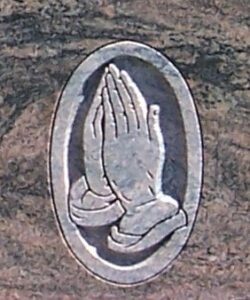
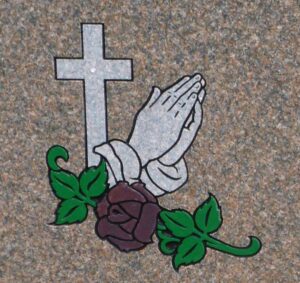
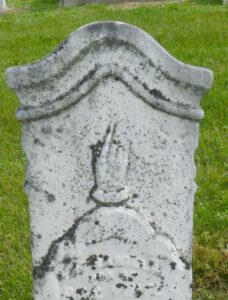
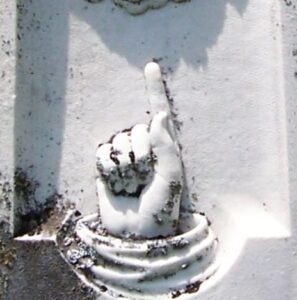
Tombstone Tuesday-Hands

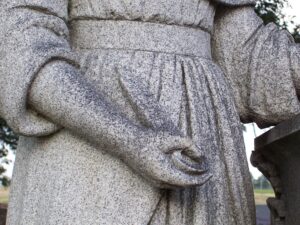
Hands are depicted in many ways on tombstones.

Praying:

Zion Lutheran Cemetery, Schumm, Ohio

Willshire Cemetery

Pointing upward:

Greenbriar Cemetery, Van Wert County, Ohio

Union Cemetery, Darke County, Ohio

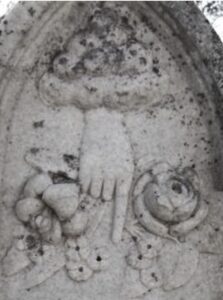
Pointing downward:

Hand pointing downward, holding flowers

Riverside Cemetery, Rockford

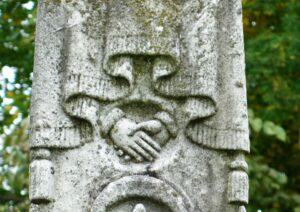
 Clasped hands:

Elm Grove Cemetery, St. Marys, Ohio

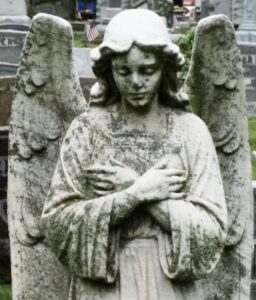
Hands crossed:

St. Joseph Cemetery, Wapakoneta

Hands are often shown holding things.

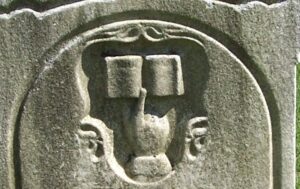
Holding a Bible:

Zion Lutheran Cemetery, Schumm

Holding a cross:

St. Augustine Cemetery, Minster, Ohio

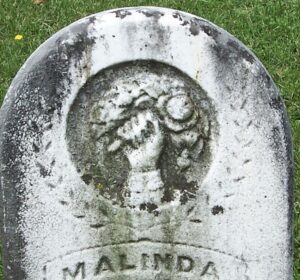
Holding flowers:

Woodland Cemetery, Van Wert

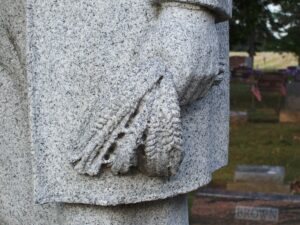
Holding shears:

Woodlawn Cemetery, Ohio City, Ohio

Holding a rope:

Woodlawn Cemetery, Ohio City

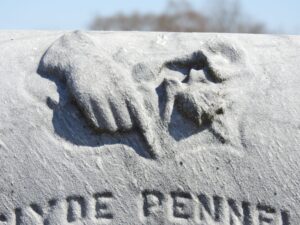
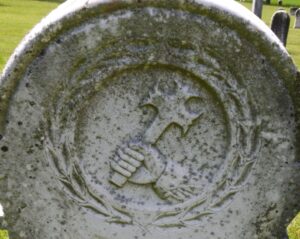
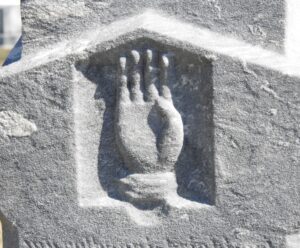
This hand probably symbolizes something, but what, I do not know. Maybe someone has an idea.

Riverside Cemetery, Rockford

Schumm Sawmill/USS Constitution Connection

As 2022 winds down to its final weeks, Willshire’s Bicentennial year does the same. The village was founded and platted in 1822 by Captain James Riley and the village and residents of the area have been celebrating its 200th birthday all year long. Willshire’s Bicentennial Committee has done a great job planning monthly events for the entire year. The latest event was last weekend, the Blessed by Willshire banquet, where Sondra Samples presented an interesting and informative slide show about the history of Willshire and some of the surrounding area.

Among the many things Sondra mentioned, I was particularly interested in the information about a connection between the sawmill at Schumm and the USS Constitution, aka Old Ironsides, nearly 100 years ago.

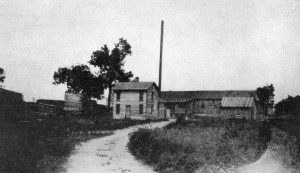
I wrote about the Schumm Sawmill in September 2014, The Schumm Sawmill  , which was owned and operated by W.P. Robinson and Fred Smith.

Schumm Sawmill, c1924.

At Saturday’s banquet Sondra told that the sawmill at Schumm provided some lumber for the 1927-1931 repair of the USS Constitution. Sondra noted that Willshire’s Photo Star published an article about this in August of this year. How did I miss that? Luckily, I found a copy of that Photo Star article in my personal newspaper archives, one of our closets.

According to the article, the following is handwritten on the back of a 1927 print of the USS Constitution, the print currently owned by a Van Wert County resident:

This picture: Old Ironsides is in Boston Navy Yards. This Ship was Rebuilt in 1927 with millions of dollars from school children’s pennies and much history carried with it—3 carloads of Indiana and Ohio white oak ship timbers 30’ to 42’ were manufactured and shipped in May 1928 from WP Robinson Co.- sawmill at Schumm, Van Wert County, Ohio on NYC-St. L NKP RR. WP Robinson and Fred A. Smith, owners; Ben H. Handwerk, mill supt.

It appears the wood was cut at Schumm and then shipped east by rail in May 1928. Wow!

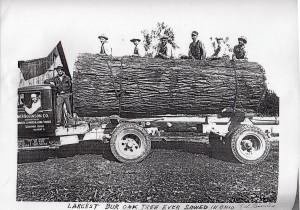
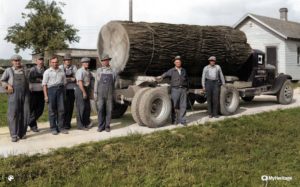
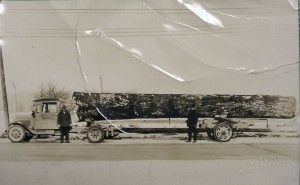
All this should come as no surprise because Robinson and Smith cut and processed some very large logs about that same time. In 1934 the Robinson Sawmill at Schumm cut the largest bur oak tree ever cut in Ohio. According to a 1934 article published in the American Lumberman, the heavy, up-to–date sawmill specialized in Indiana and Ohio white oak lumber and long timbers for high-class trade all over the U.S.

W.P. Robinson Co. with largest bur oak sawed in Ohio, 1934.

Schumm sawmill, w/Carl Weinman, photo courtesy of Deb Reichard.

Bur Oak from Auglaize County, Ohio, 1930.

White oak is what they needed. White oak trees are the longest living trees in this area. In addition to shipbuilding, white oak is used for bridge timbers, office furniture, flooring, caskets.

A little more about the USS Constitution.

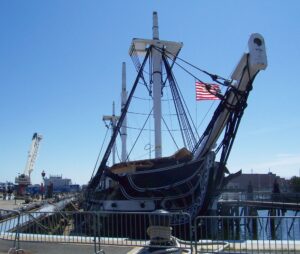
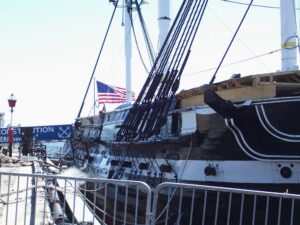
The USS Constitution, a frigate, was built about 1794 and launched in 1797, the third of six original frigates authorized in 1794. It was built with white oak, which is waterproof and rot resistant. The vessel was nicknamed Old Ironsides after its War of 1812 battle against the HMS Guerriere, when the enemy’s shots seemed to repel off its thick oak sides.

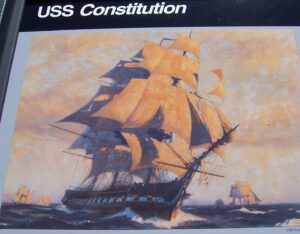
USS Constitution, Boston marker, 2009

By the 1920s the USS Constitution was in very poor condition, rotting, and at risk of sinking. A significant restoration was done to the USS Constitution from 1927-1931 and nearly 85% of it was restored. To help raise money for the restoration U.S. school children across the country raised $154,000 through their Pennies Campaign.

White oak trees were needed for the restoration and those suitable for ships and restoration are usually 110-120 years old and 40 inches in diameter. Maintaining a source of white oak for building and repairs of a fleet has been a concern since the vessels were built. Trees were often cut when they were found and transported to navy yards, where they were stored in sheds or in freshwater ponds for future repairs. The first naval live oak plantation for this purpose was acquired in 1828 in Pensacola, Florida. Some oak that was cut around 1860 and stored at the Pensacola Navy Yard were still viable for the 1927-1931 restoration.

Since that major restoration nearly 100 years ago, and because seasoned white oak is difficult to find, the Navy decided to grow its own white oak for the continuous restoration of the USS Constitution. In 1973 the Navy dedicated an area at the Naval Facilities Engineering Command in Crane, Indiana, where 150 mature white oaks are spread over the 64,000-acre base. There is a special area there, Constitution Grove, a small ceremonial area with oaks that are used to repair the USS Constitution. Thus, the Navy maintains an inventory of cut and standing white oaks for future repairs at Crane. Crane is the third largest naval base in the world and houses the largest contiguous forest under single ownership in Indiana. Crane is located 35 miles southwest of Bloomington.

The USS Constitution is the oldest commissioned warship still afloat. The ship has never had a cannonball pierce her sides. Planks, 30-40 feet long and 6 inches thick, with no defects are required for repairs.

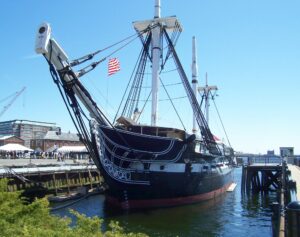
We saw the USS Constitution/Old Ironsides when we were in Boston in 2009, when son Jeff ran the Boston Marathon. We did not get to take a tour of the ship but I did get some photographs:

USS Constitution, 2009

USS Constitution, 2009

USS Constitution, 2009

How interesting to learn about a Schumm connection to the historic USS Constitution.

Sources:

USSConstitution and the Legacy of Live Oak

Gary R Morrison Blog, Historic Trees: Constitution Grove White Oaks

Indiana Connection, Ironsides of Indiana Oak