Schumm-Schinnerer California Wedding, 1901

A Schumm/Schinnerer wedding would not have been that unusual around the Schumm, Ohio, area in 1901, but you would not expect to hear of one in Long Beach California. But there was one such wedding and the couple was originally from Schumm.

These are photos from the Germann Collection—a collection of old family photos that once belonged to sisters Edna and Viola Germann.

Edna (1896-1997) and Viola (1900-2001) were the daughters of Stephen E. and Anna Elizabeth “Rosina” (Schumm) Germann. Edna and Viola were the granddaughters of Jacob “Frederick” and Maria (Germann) Schumm on their maternal side and granddaughters of Henry and Mary (Hertz) Germann on the paternal side of their family.

Fortunately names were written on the back of these wedding photos. Thank you Edna and Viola!

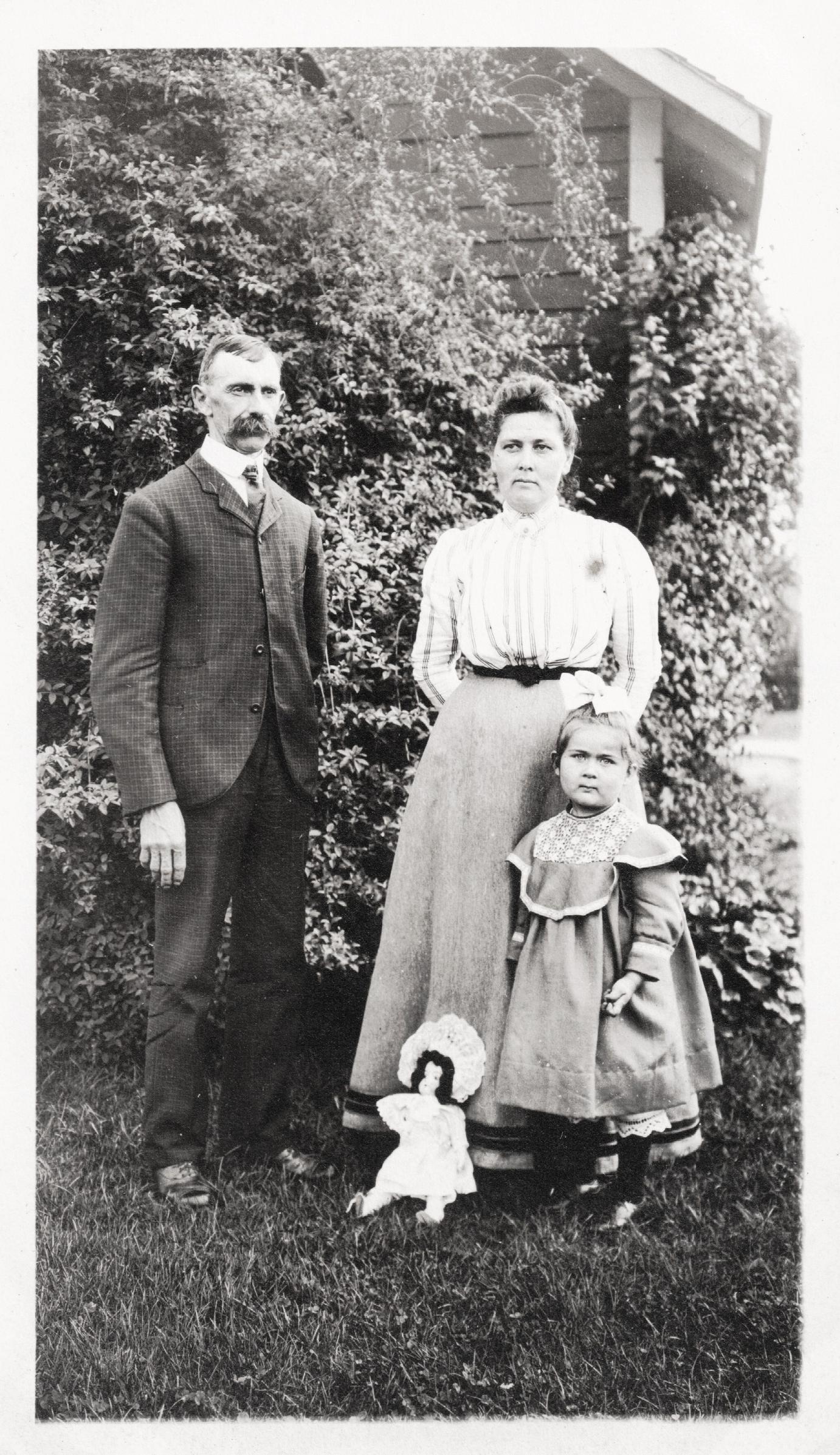
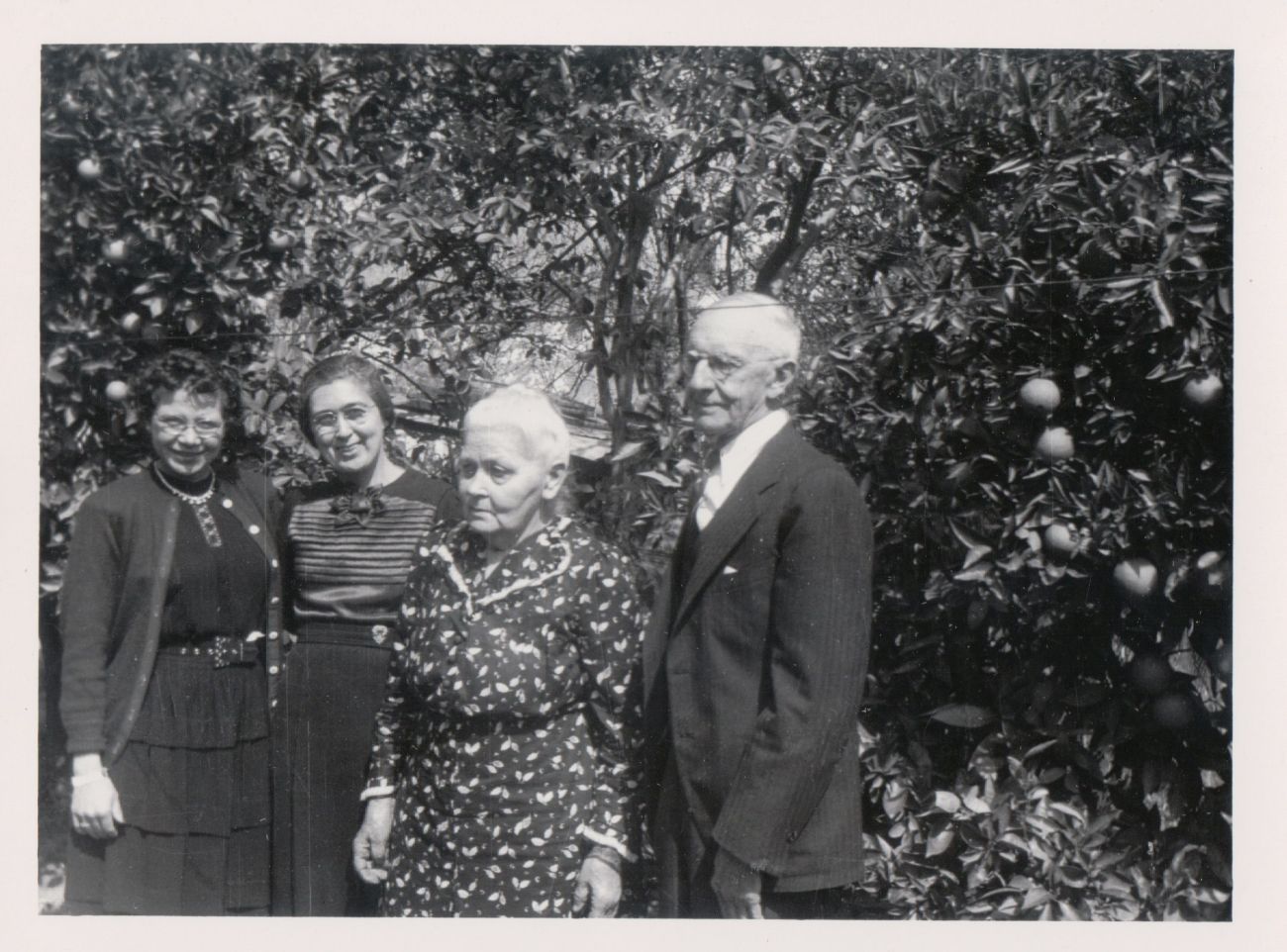
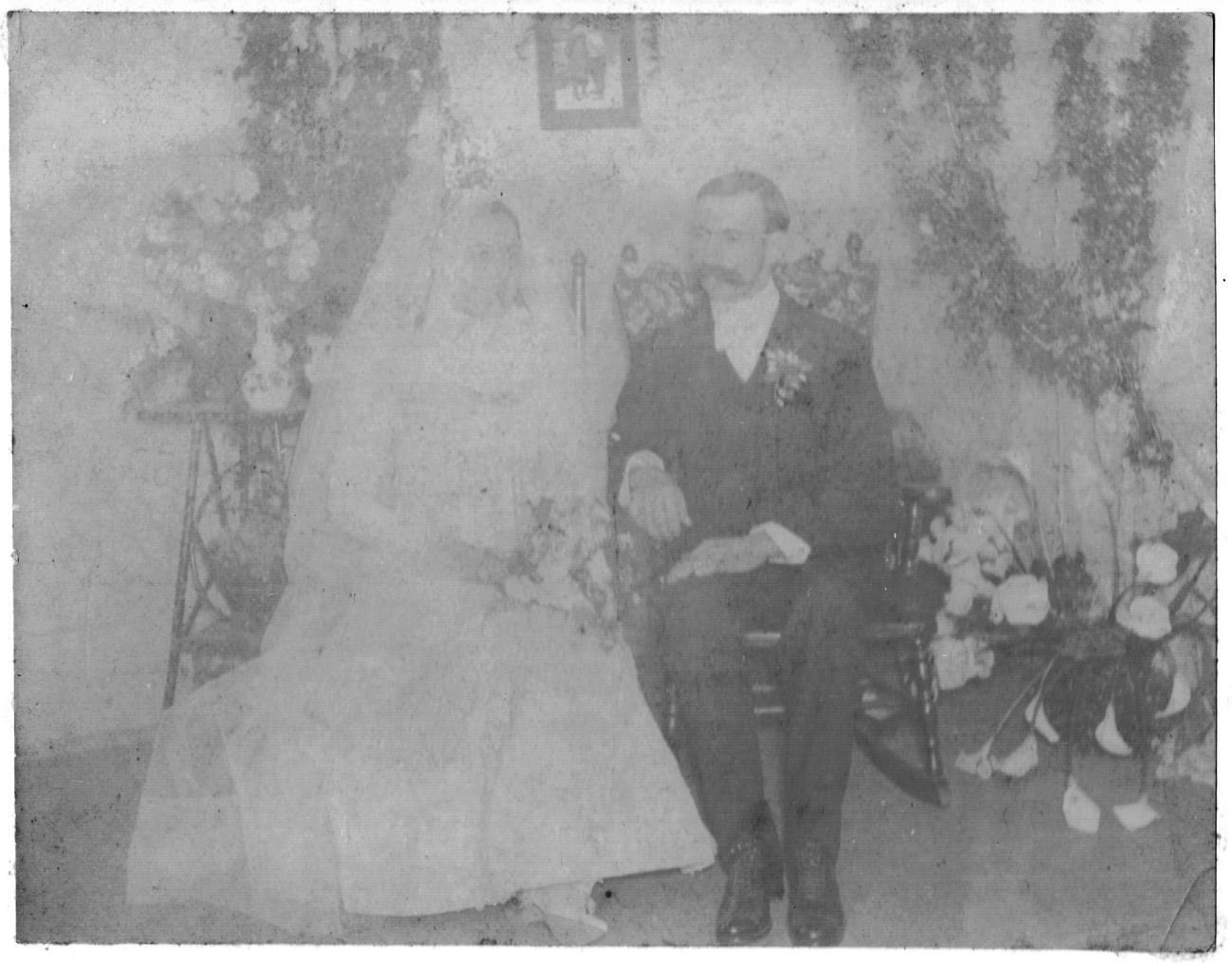
George & Barbara (Schinnerer) Schumm wedding photo, California, 1901.

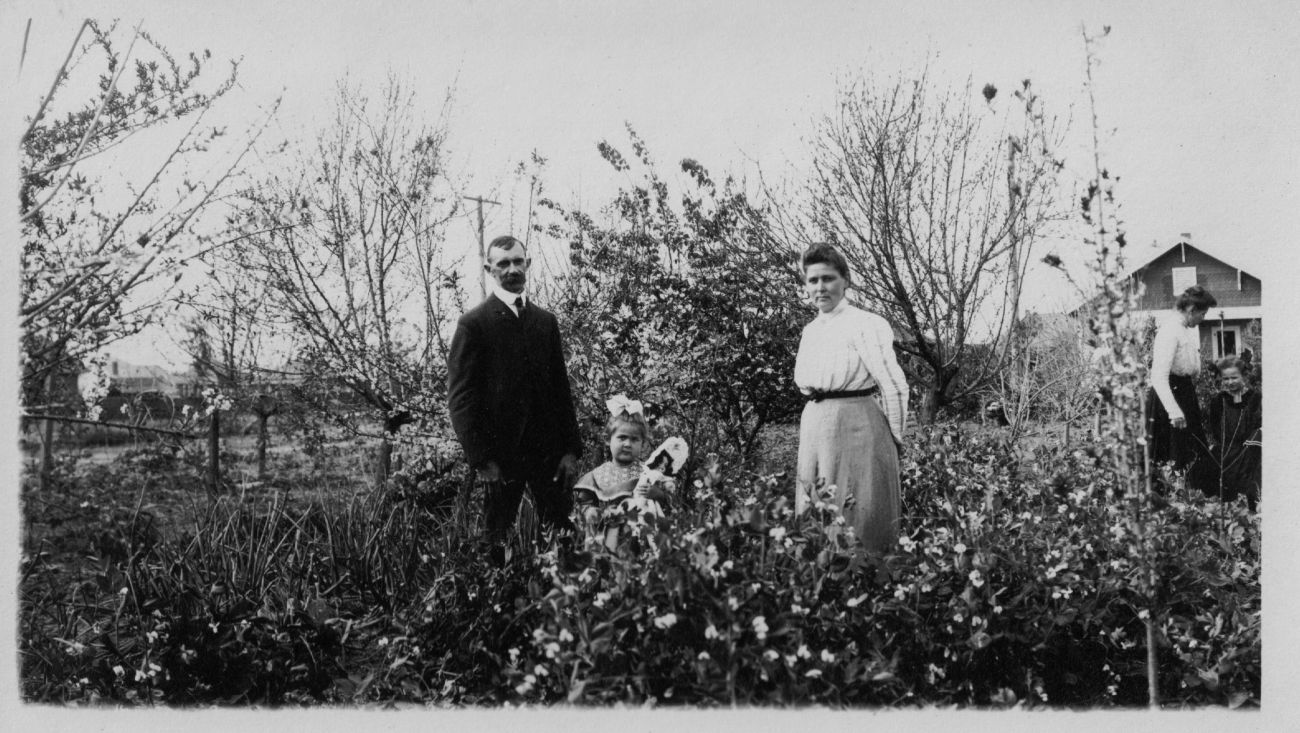
George & Barbara (Schinnerer) Schumm wedding photo, Long Beach, California, 1901.

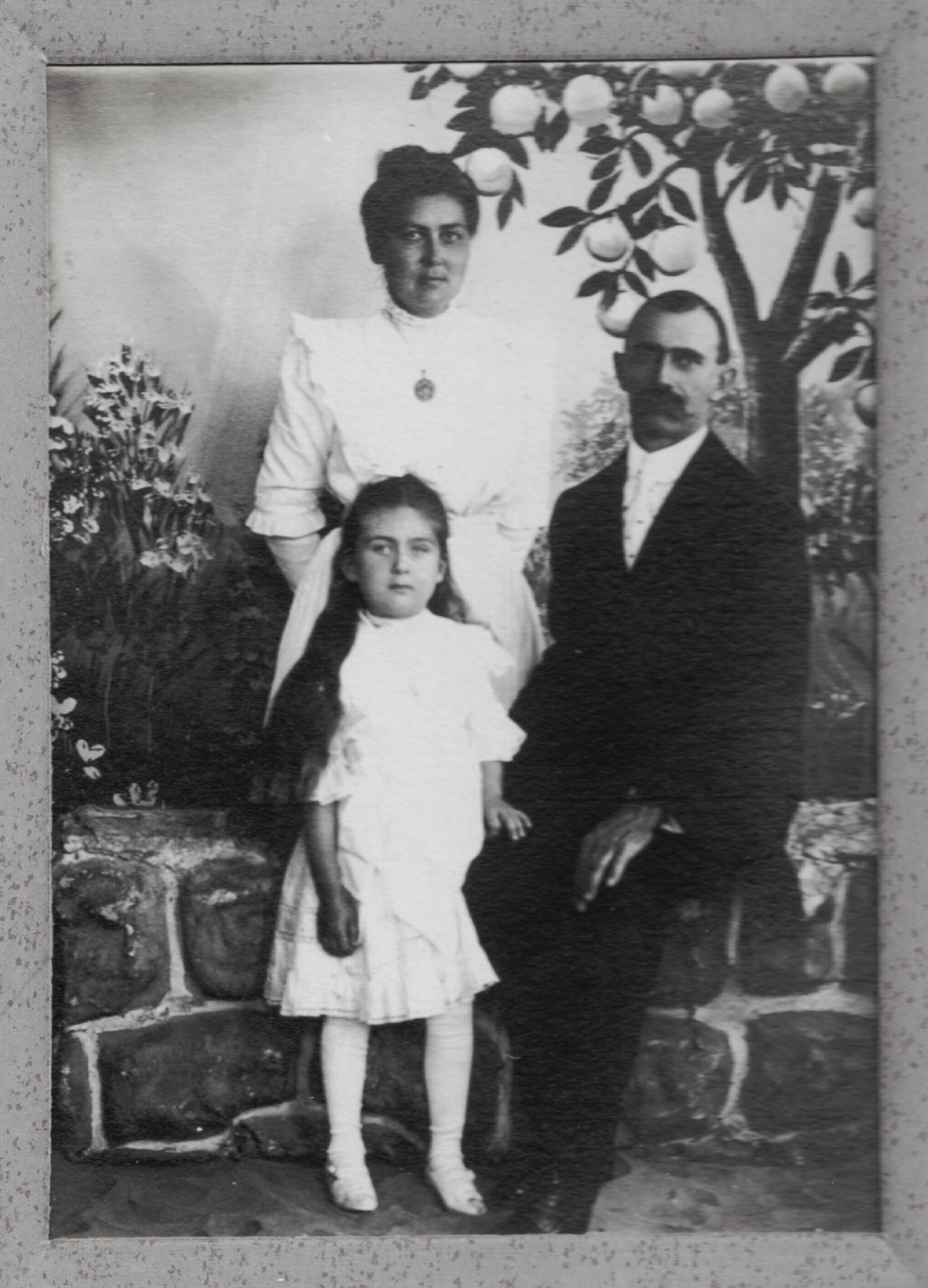
The newlyweds are George Schumm and Suzanna “Barbara” Schinnerer

The groom was Edna and Viola’s uncle George Schumm—their mother’s brother. George’s was born 23 July 1867 to Jacob “Frederick” and Maria (Germann) Schumm. He was christened George Martin Ludwig Schumm.

The bride was Susanna “Barbara” Schinnerer, born east of Willshire on 6 December 1866 to Martin Schinnerer and his first wife Maria “Mary” (Schumm). Martin’s wife Mary died in 1870 and Martin married her sister Rosina. Martin and his family moved to California sometime around the turn of the century.

George & Barbara (Schinnerer) Schumm wedding photo, California, 1901.

George & Barbara (Schinnerer) Schumm wedding photo, Long Beach, California, 1901.

This story about Martin Schinnerer may sound familiar. I wrote about Martin and his family earlier this year after a visit from Paul, one of Martin’s descendants from California, who visited the Schumm area last fall. Martin Schinnerer sold his farm to my great-grandfather John Scaer in 1903 and Martin and his family moved to California. [1]

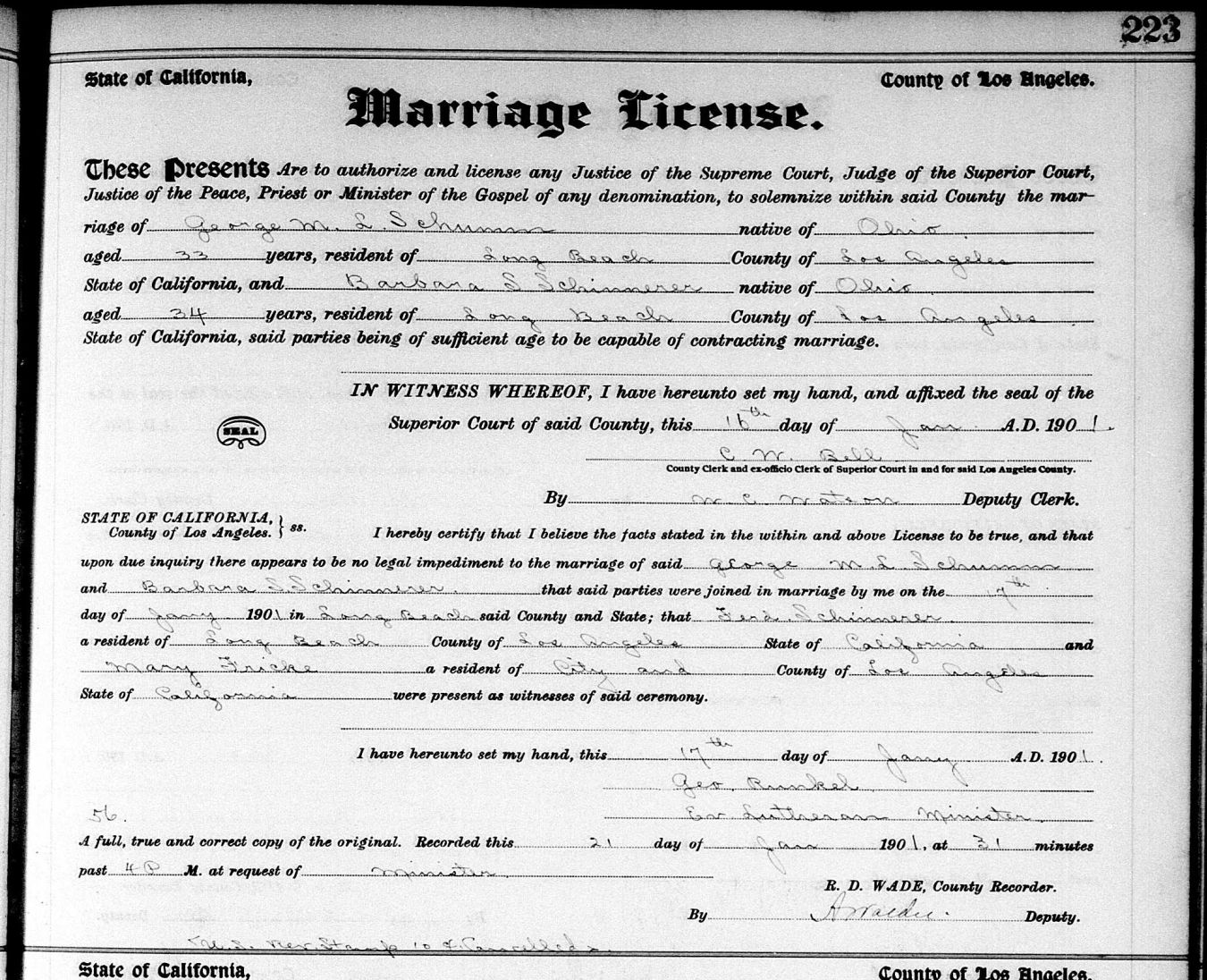
George Schumm and Barbara Schinnerer were married on 17 January 1901 in Long Beach, California. [2]

Marriage license & return, George Schumm & Barbara Schinnerer, Long Beach, California, 1901.

Marriage license & return, George Schumm & Barbara Schinnerer, Long Beach, California, 1901. [2]

According to their marriage license both George and Barbara lived in Long Beach. George was 33 and Barbara was 34 years old. Witnesses to their marriage were Ferd Schinnerer and Mary Fricke. Rev. George Runkel of the Evangelical Lutheran Church there presided over the ceremony. [2]

We were unsure when the Schinnerers moved to California, but Barbara was already living there when she married in 1901. She gave her residence as Long Beach.

George Schumm was still living at home with his parents and working on the family farm in Dublin Township, Mercer County, Ohio, in 1900. [3] Although George moved to California the rest of his family remained in the Midwest.

These wedding photos give us glimpse of what was probably the Schinnerer home in California. The floral decorations were festive and Barbara wore an elaborate headpiece and veil.

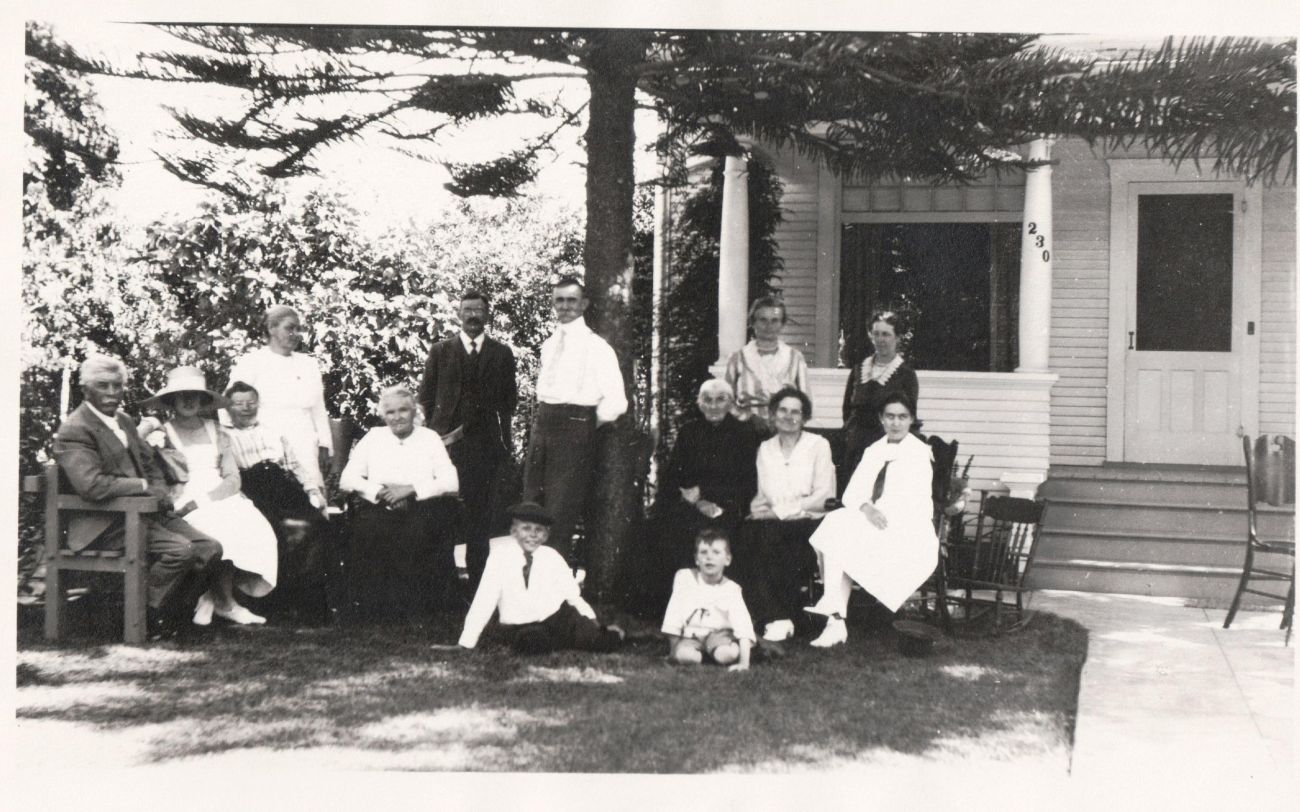
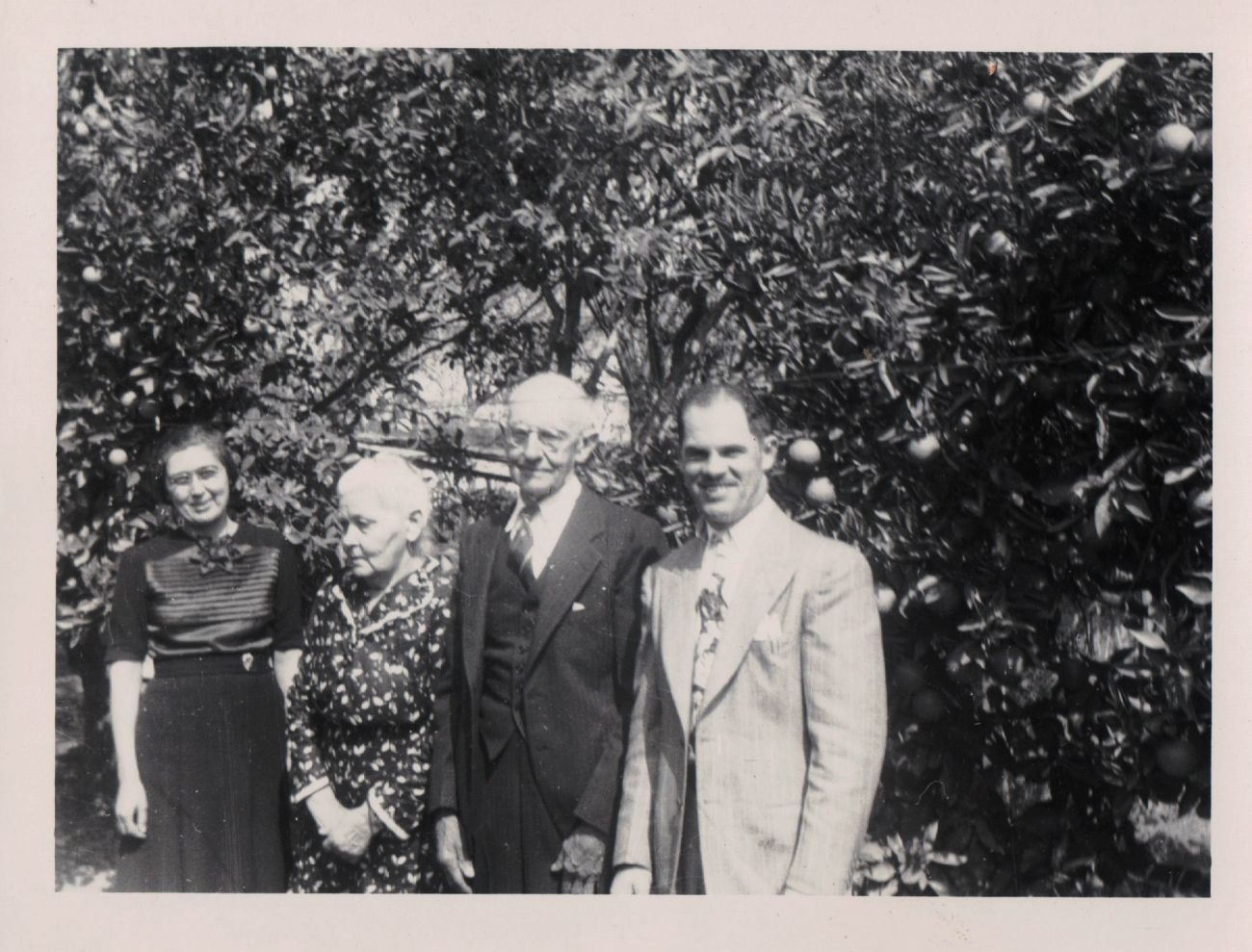
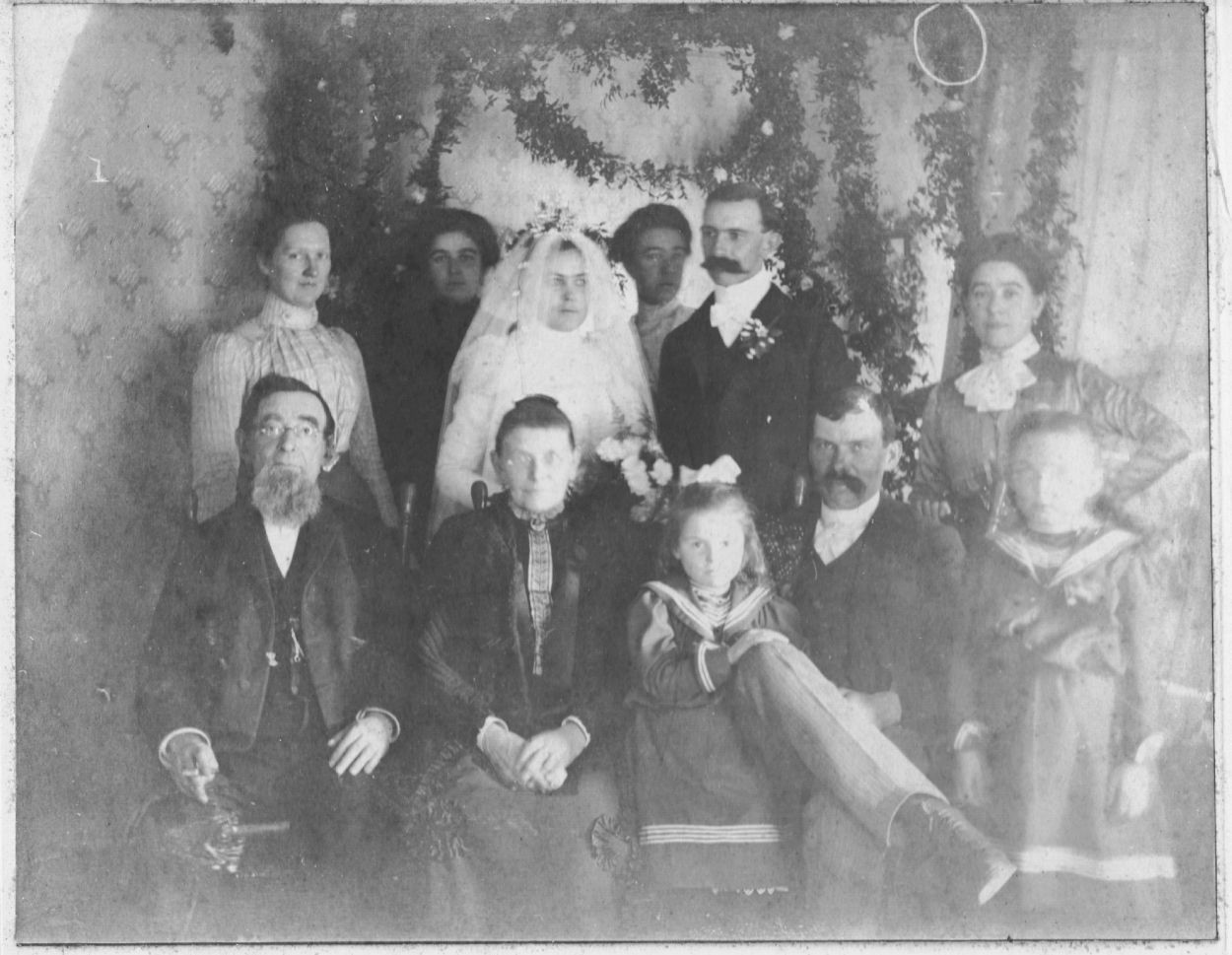
Below is a nice family photo of the bride and groom with Barbara’s parents and siblings. It is labeled “brothers and sister” but there are a lot of females in the photo. Barbara’s youngest sister, a half sister, would have been 20 years old.

George & Barbara (Schinnerer) Schumm wedding photo, California, 1901. "Aunt Barbara's parents, brothers & sister, Long Beach, California."

George & Barbara (Schinnerer) Schumm wedding photo, 1901. Labeled “Aunt Barbara’s parents, brothers & sister, Long Beach, California.”

In 1917 George worked as a carpenter and he and Barbara lived at 1048 E 5th Street in Long Beach. [4]

George and Barbara had one daughter, Freida Maria Schumm (1907-2005).

The family remained in California for the rest of their lives.

Barbara (Schinnerer) Schumm died 27 February 1952 in Orange County, California. [5]

George Schumm died in Orange County, California, on 6 July 1958. [6]


[1]Schinnerer and Schumm Cousins,” Karen’s Chatt, 22 Jan 2016.

[2] “California, County Marriages, 1850-1952,” database with images, FamilySearch (https://familysearch.org : accessed 15 Sep 2016), George M> Schumm and Barbara S Schinnerer, 17 Jan 1901; from Los Angeles, CA, Marriages, p.223; FHL microfilm 2073996.

[3] 1900 U.S. Census, Dublin, Mercer, Ohio, ED 77, p.13B, dwelling 276, family 280, George Schunni; digital image by subscription, Ancestry.com (www.ancestry.com : accessed 15 Sep 2016); FHL microfilm 1241303, NARA microfilm T623, roll 1303.

[4] U.S. City Directories, 1822-1995, Long Beach, California, City Directory, 1917, p.162, George M Schumm; database on-line, Ancestry.com (www.ancestry.com : accessed 15 Sep 2016).

[5] California, Death, Index, 1940-1997, Sacramento, CA, Barbara Schumm, 27 Feb 1952; database on-line, Ancestry.com (www.ancestry.com : accessed 15 Sep 2016).

[6] California, Death, Index, 1940-1997, Sacramento, CA, George Schumm, 6 Jul 1958; database on-line, Ancestry.com (www.ancestry.com : accessed 15 Sep 2016).

Tombstone Tuesday–Infant Daughter of William & Katie (Schaadt) Becher

Infant Daughter of William & Katie Becher, Zion Lutheran Cemetery, Chattanooga, Mercer County, Ohio. (2011 photo by Karen)

Infant Daughter of William & Katie Becher, Zion Lutheran Cemetery, Chattanooga, Mercer County, Ohio. (2011 photo by Karen)

This is the tombstone of the infant daughter of William and Katie Becher, located in row 7 of Zion Lutheran Cemetery, Chattanooga, Mercer County, Ohio. The marker is inscribed:

INFANT Dau. of
Wm. P. & C.S. Becher
1914

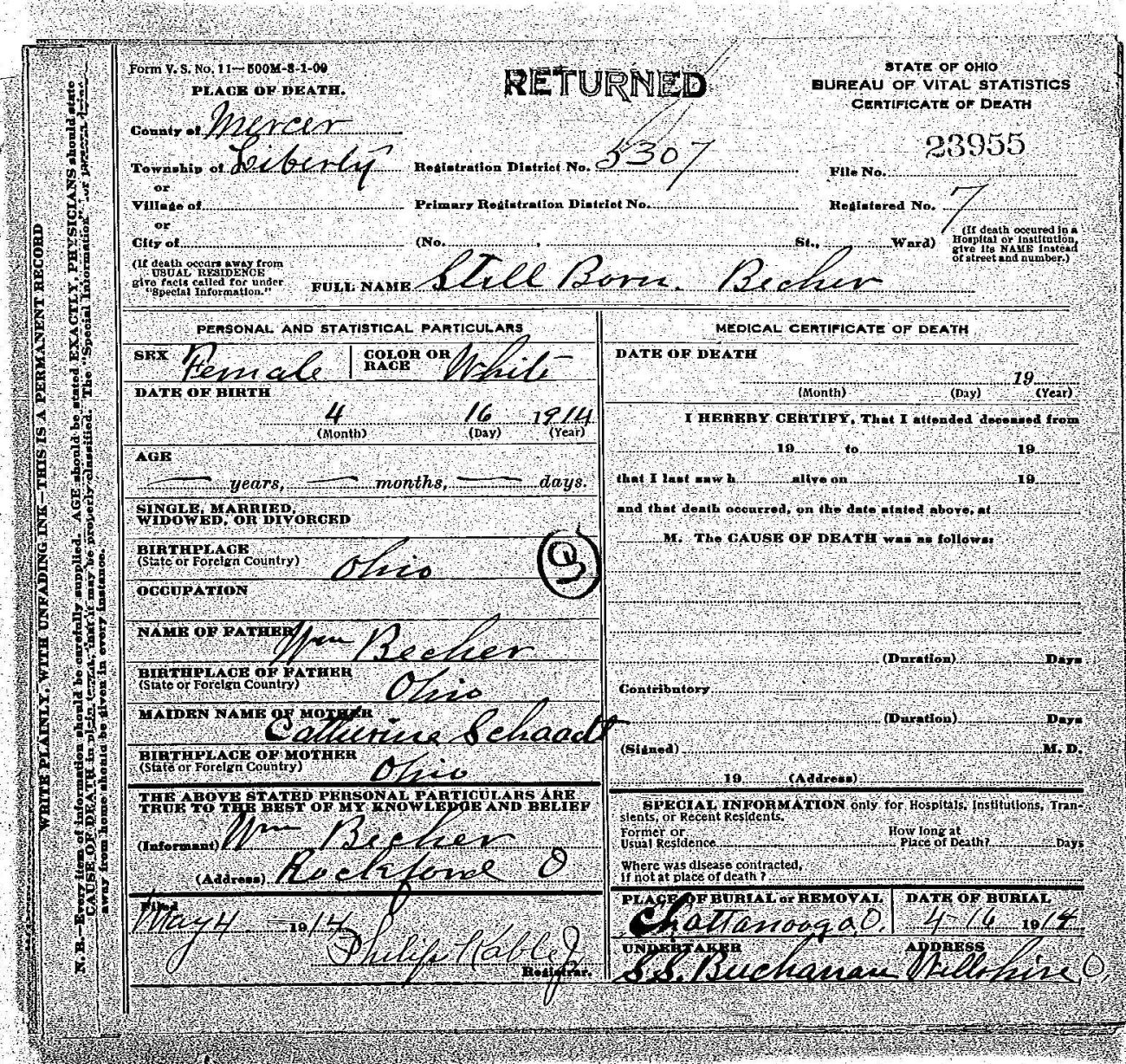
This baby girl was the seventh child born to at William P. and Katie (Schaadt) Becher. [1] She was stillborn on 16 April 1914 at her parents’ home in Liberty Township, Mercer County, Ohio.

She was buried on the 16th and S.S. Buchanan of Willshire was the undertaker. There is no entry for this child in the church records but information was obtained from her death certificate. [2]

Death certificate of stillborn daughter of William & Katie Becher, 1914.

Death certificate of stillborn daughter of William & Katie Becher, 1914.

Her parents were both from Liberty Township her grandparents were John and Anna Maria (Becker) Becher and Adam and Mary (Koch) Schaadt.


[1] Note: Although the tombstone shows the mother’s initials as “C.S.” the mother usually went by the name of Katie, spelling her name with a K. The C.S. probably stands for Catherine Schaadt.

[2] “Ohio Deaths, 1908-1953,” database with images, FamilySearch (https://familysearch.org : accessed 10 Sep 2016), [female] Becher, 16 Apr 1914; from Liberty Twp., Mercer Co., Ohio, deaths, file no. 23955; FHL microfilm 1953914.

The Page Pipe Organ at Zion Chatt

Last week I wrote about the 100th anniversary of the building of Zion Lutheran Church in Chattanooga, Ohio, the current brick building that was built in 1916 and dedicated in 1917.

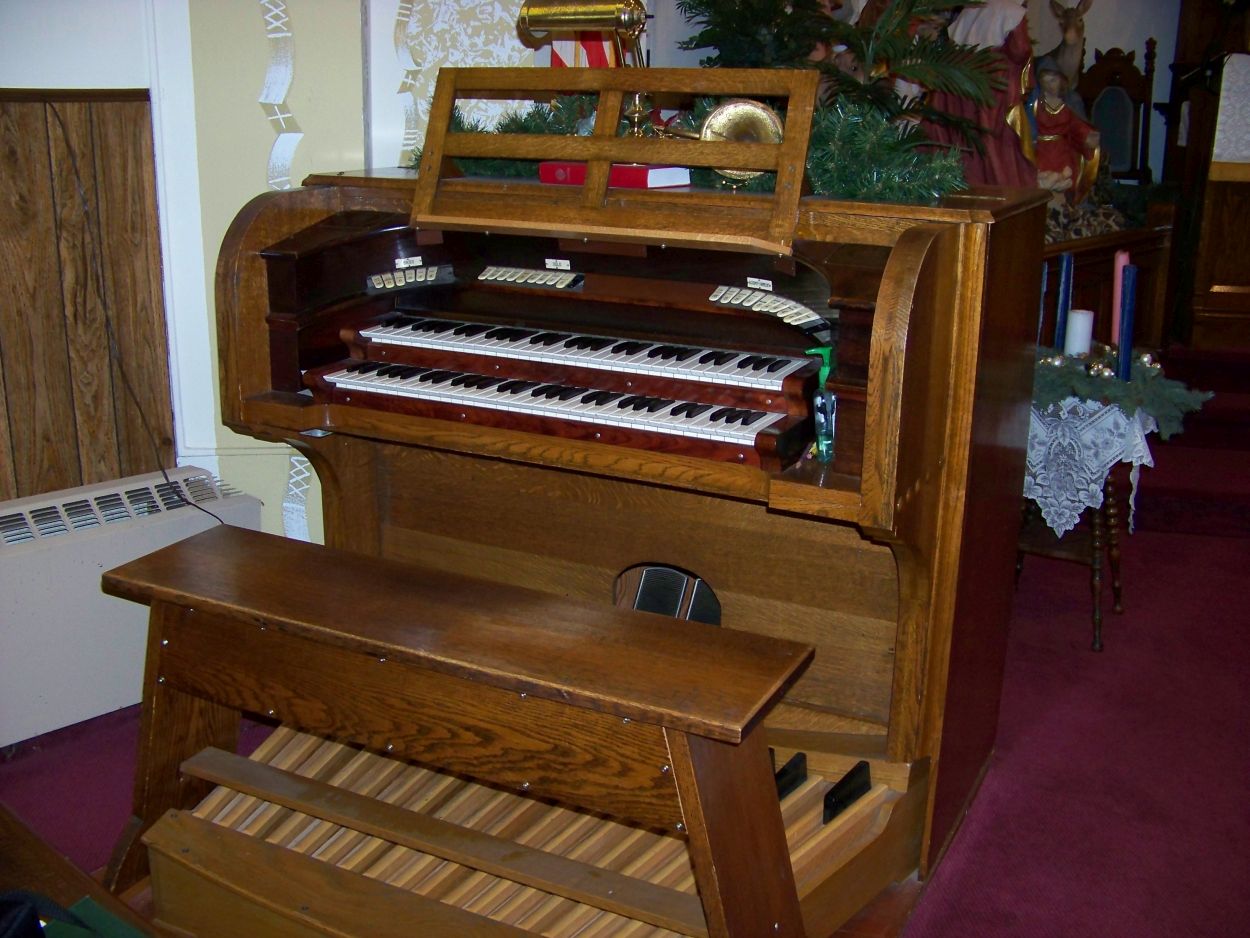
There is one item inside the church that I am very familiar with—the Page pipe organ. I have played on it nearly every week for over 50 years. Although Zion’s Page organ is not original to the brick church it is probably about 90 years old.
Zion Chatt's Page pipe organ. (2007 photo by Karen)

Zion Chatt’s Page pipe organ. (2007 photo by Karen)

It appears that Zion’s old frame church also had a pipe organ. You can see the pipes in the background on the right side of this 1913 confirmation photo, which I believe was taken in the old frame church.

1913 Confirmation at Zion Chatt, pipes to the right back.

1913 Confirmation at Zion Chatt, pipes to the right. [1]

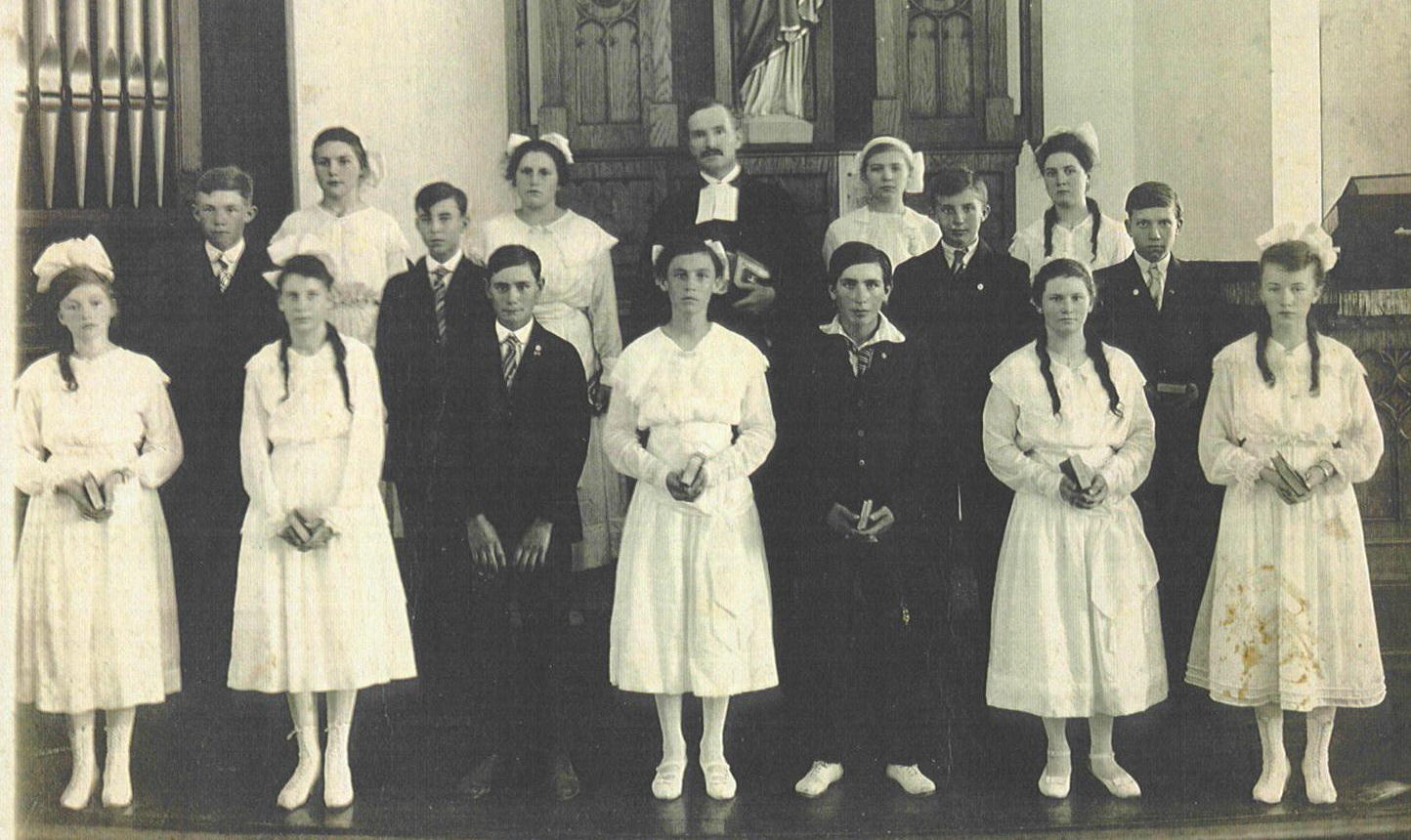
The newly built brick church had a pipe organ installed and you can see the pipes on the left in this 1917 confirmation photo. This would have been one of the first photos taken inside the new church. Perhaps they moved the organ from the old church building into the new building in 1916. Today the organ chamber with the pipes is in this same location, but the pipes are concealed behind a louvered wall.
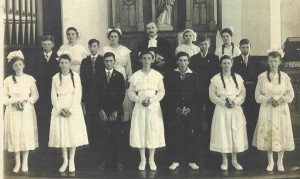
1917 Confirmation at Zion Chatt. Organ pipes to the left.

1917 Confirmation at Zion Chatt. Organ pipes to the left. [2]

Sometime during the first half of 1935 Zion Chatt purchased the Page pipe organ that we still use today.

The Page Pipe Organ Company was located in nearby Lima, Ohio. The company made home and theatre organs beginning in 1922 and flourished during the years between 1922 and 1930, when they made over 100 theatre organs. That was era of silent movies and these theatre pipe organs accompanied the silent movies with music and sound effects. The Page Pipe Organ Company declined with the advent of talking movies and the Great Depression.
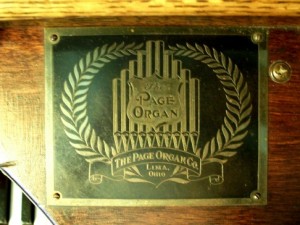
Page Organ Company name plate, Zion Lutheran Church, Chattanooga, Ohio.

Page Organ Company name plate, Zion Lutheran Church, Chattanooga, Ohio.

I have heard over the years, from several church elders, that Zion’s Page organ came from a theatre in St. Marys. This makes sense for several reasons. The Page Organ Company in Lima was not all that far away. St. Marys had at least two or three theatres at that time and at least one of those theatres could very well have had a Page Organ. In 1935 theatres were changing from silent movies to movies with sound and and they were getting rid of their pipe organs. Pipe organs were taken out of the theaters and many of them were relocated to local churches. My friend Dwane has researched the Page Organ Company extensively and has discovered where many of these Page organs are located today. And finally, the pastor at Zion Chatt in 1935  was Rev. Carl Yahl, who was from St. Marys. He would have known about the availability of an organ from a theatre in his home town and could have taken the opportunity to purchase one for Zion Chatt.

It is a good theory and makes a good story but unfortunately I have not been able to prove it.

However, I was fortunate enough to find one newspaper article on page 6 of the 13 June 1935 issue of the Willshire Herald. It provides a time period for the organ’s purchase:

Organ Recital At Zion Lutheran Church
An organ recital in dedication of the new organ recently installed in the Zion Lutheran Church in Chattanooga, will be held Sunday, June 16, at 8:00 p.m.

Following is the program that will be rendered:
Prayer, Stark.
Chant d’ Amour, Gillette.
“Jubilate Deo,” Silver.
Soprano Soloist—“Still, Still With Thee”—Ward Stephen.
Berceuse, Godard.
Prelude and Fuga in G, Christiansen.
The Shepherd Flute, Christiansen.
Choir, “The Silent Sea”—Neidlinger.
Autumn, Johnson.
“Nobody Knows the Trouble I See,” Gillette.
Torchlight March, Clark.

 Soloist, Mrs. Koneta Stroh.
Organist, Carl Yahl.

 Sunday School 9:30 a.m.
Church Service 10:30
Organ Recital, 8:00 p.m.
Rev. Carl Yahl, pastor

Was it a brand new organ? Or was it a used organ that was “new” to the church.

I looked for other Willshire Herald articles during that general time period that might tell about the acquisition of the organ. Nothing. I even spent several hours looking through old St. Marys newspapers on microfilm, hoping there would be some mention that one of the theatres in St. Marys had modernized and was showing talking movies during that time period. Again, nothing.

Zion’s Page pipe organ is a very small organ compared to some of the other Page organs and compared to most other church pipe organs. But it has a nice sound and is in very good condition. It is maintained by the Holycross Brothers at Lima Pipe Organ, who service it twice a year.
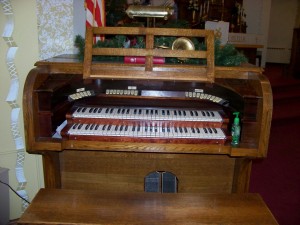
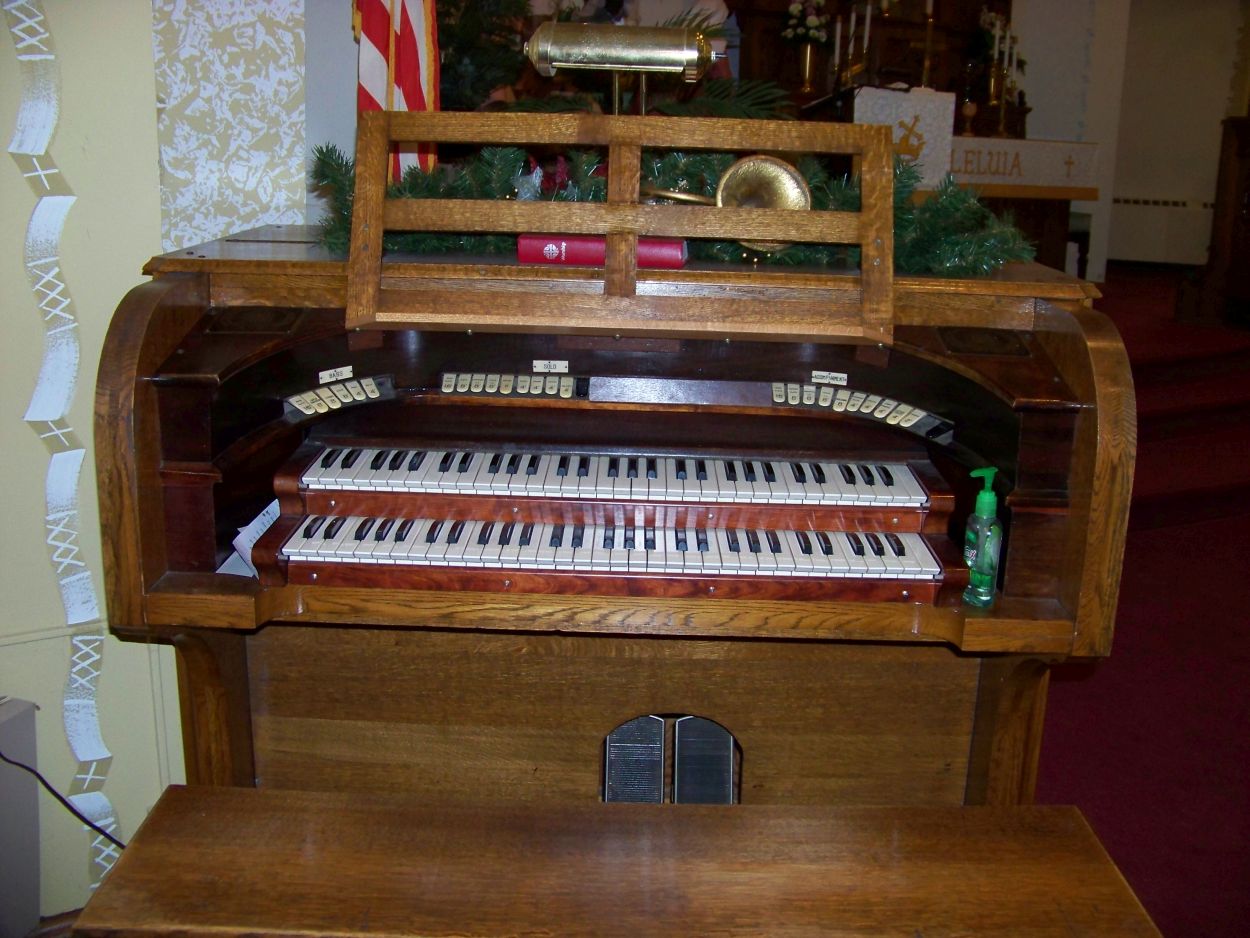
Zion Chatt's Page pipe organ. (2007 photo by Karen)

Zion Chatt’s Page pipe organ. (2007 photo by Karen)

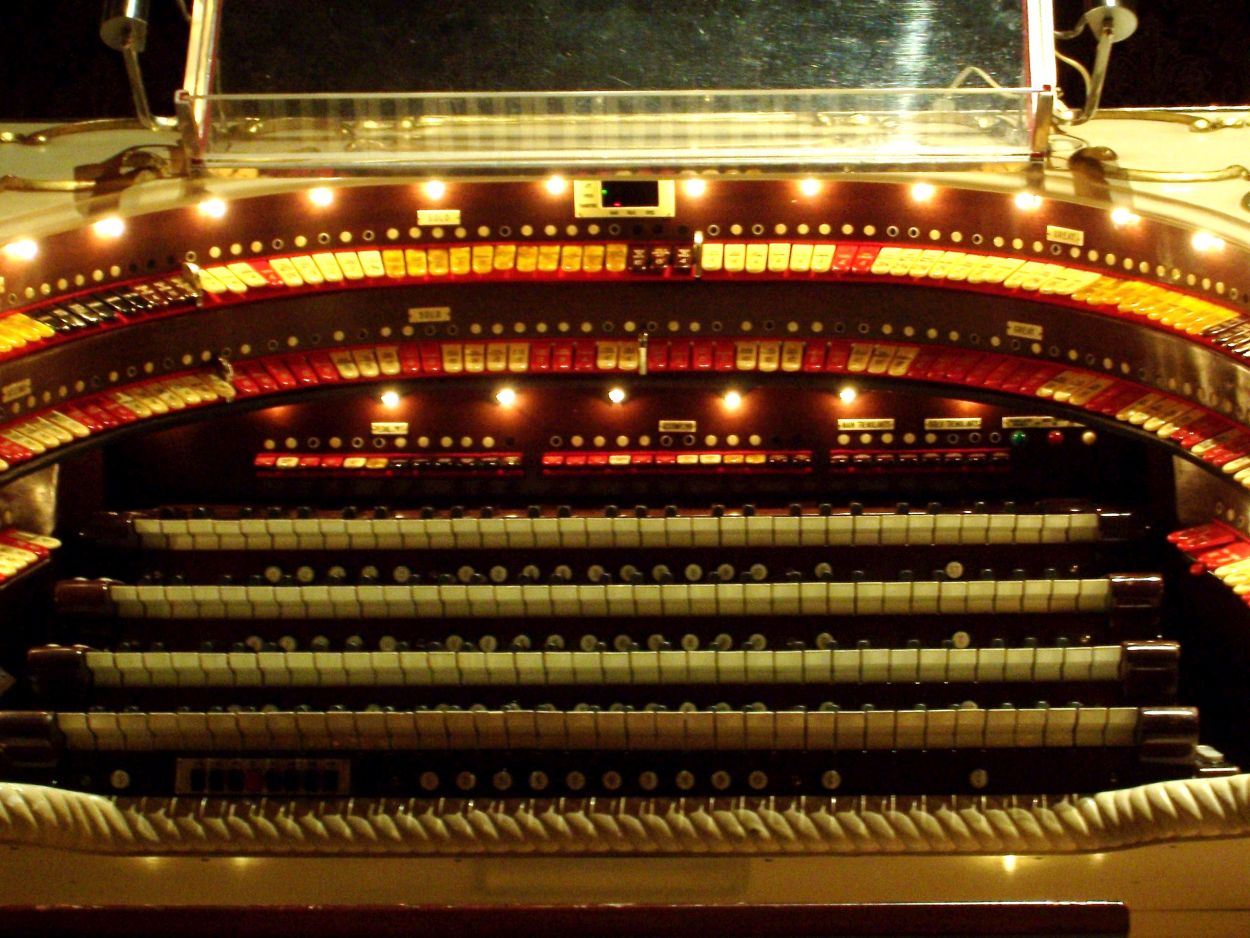
Theatre organs usually have a horseshoe shape and their tabs are also arranged in a horseshoe. Some of the sounds made by the theatre organs were unsuitable for church music and were removed when they were installed in a church. These included certain horn sounds, xylophone, and drums. I remember that our Page organ once had a xylophone stop on it but was removed after the chamber flooded. Soft strings were installed in its place. Our organ has 2’, 4′, 8′, & 16’ flutes; an 8’ diapason, 8’ & 4’ strings, and a 4’ horn.
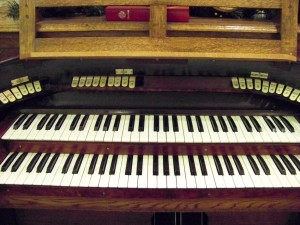
Zion Chatt's Page pipe organ. (2007 photo by Karen)

Zion Chatt’s Page pipe organ. (2007 photo by Karen)

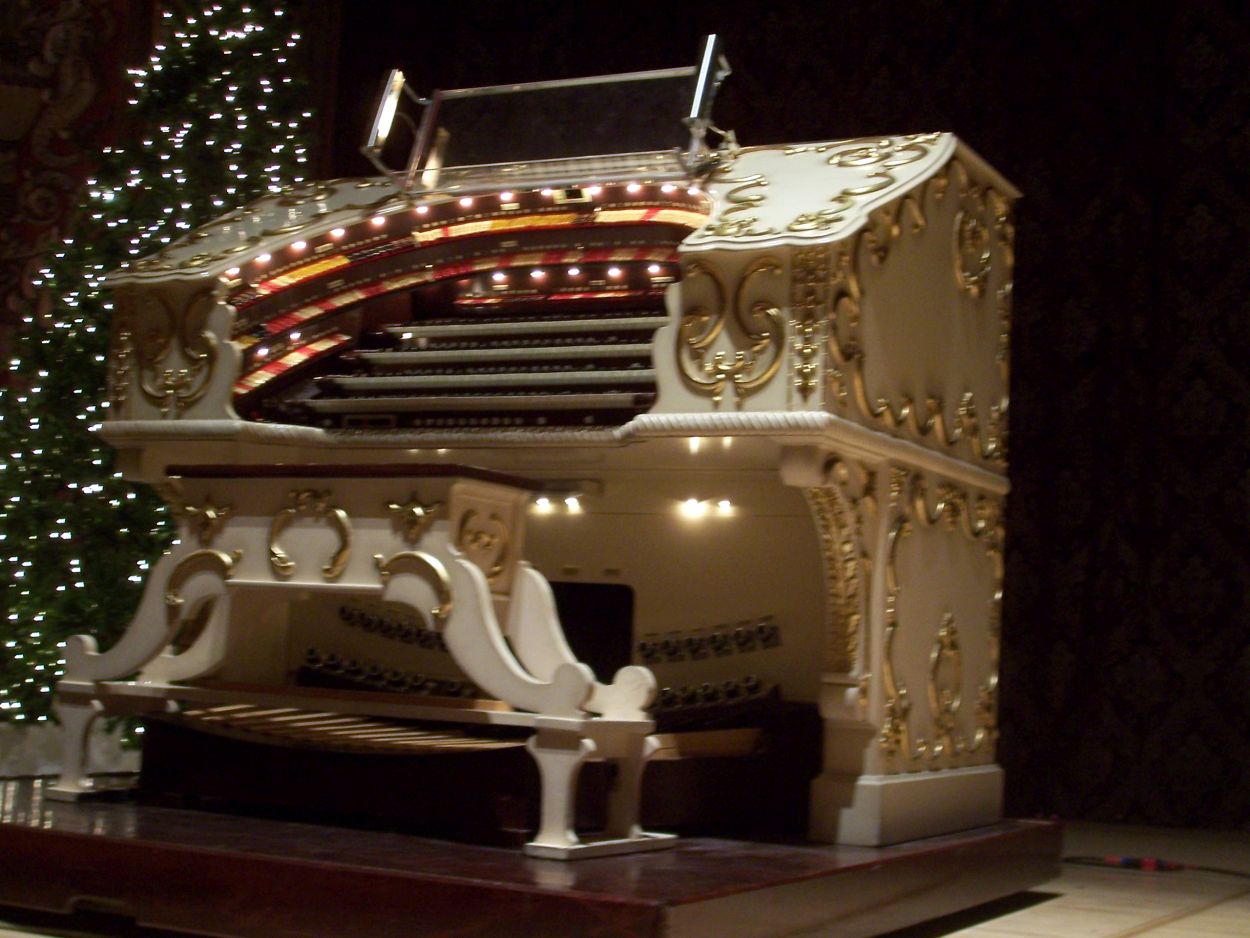
Zion’s Page pipe organ is the baby brother to this Page organ at the Embassy Theatre in Fort Wayne:
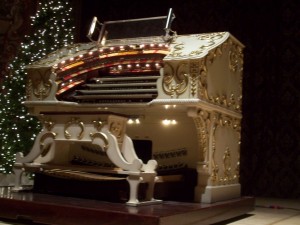
Page theatre pipe organ at Embassy Theatre, Fort Wayne, Indiana. (2011 photo by Karen)
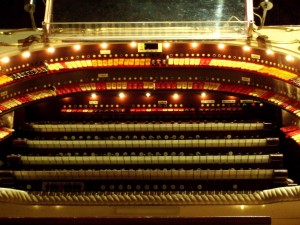
Page theatre pipe organ at the Embassy Theatre, Fort Wayne, Indiana. (2011 photo by Karen)

Page theatre pipe organ, Embassy Theatre, Fort Wayne, Indiana. (2011 photo by Karen)

Page theatre pipe organ, Embassy Theatre, Fort Wayne, Indiana. (2011 photo by Karen)

Our Page pipe organ has had its moments over the 50+ years I have played it. It is an old instrument and things do stick and break down from time to time. Some problems I have encountered:

Ciphers. Occasionally, during the cold winter months, the dryness from winter heating causes organ ciphers—an unwanted, annoying, continuous wail, usually a shrill note (or notes) heard when the organ is on. The only way to stop the sound is to turn the organ off, which, as the air decreases in the chamber, causes the shrill sound to gradually drop in pitch and fade away. Like the air going out of a noisy balloon. The sound will start up again when the organ is turned on. Very annoying and rather disruptive during a service. At least to the organist and the minister. Usually there is only one cipher at a time but last year there were several at once on one particular Sunday. We have learned that it is best to run a humidifier in cold weather.

Temperature. The pipes change pitch according to the temperature. This is really not noticeable unless I am playing the organ with the piano. We enjoy playing piano and organ duets and they sound best if both instruments are in tune with each other. We keep the piano tuned at one pitch, a “winter” pitch. That means the piano and organ are in tune during the cold months but are not in tune when the temperature gets above 68-70 degrees. During cold weather the organ chamber door must be left open so the heat from the sanctuary will warm the pipes and bring them up to the correct pitch to match the piano. Otherwise, since the chamber is in an unheated room with an outside wall, the pitch would be too far the other way.

Rain. Then there was the time the roof leaked over the organ chamber and water filled the pipes. That caused a very nasty organ sound. The organ was not playable. That episode resulted in having the pipes repaired and refurbished and the whole pipe chamber being rebuilt, repainted, and water-proofed. The whole process took several months and a whole lot of work for the Holycross brothers.
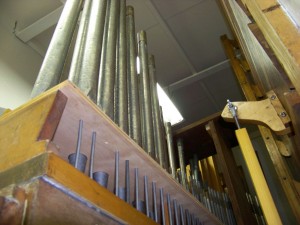
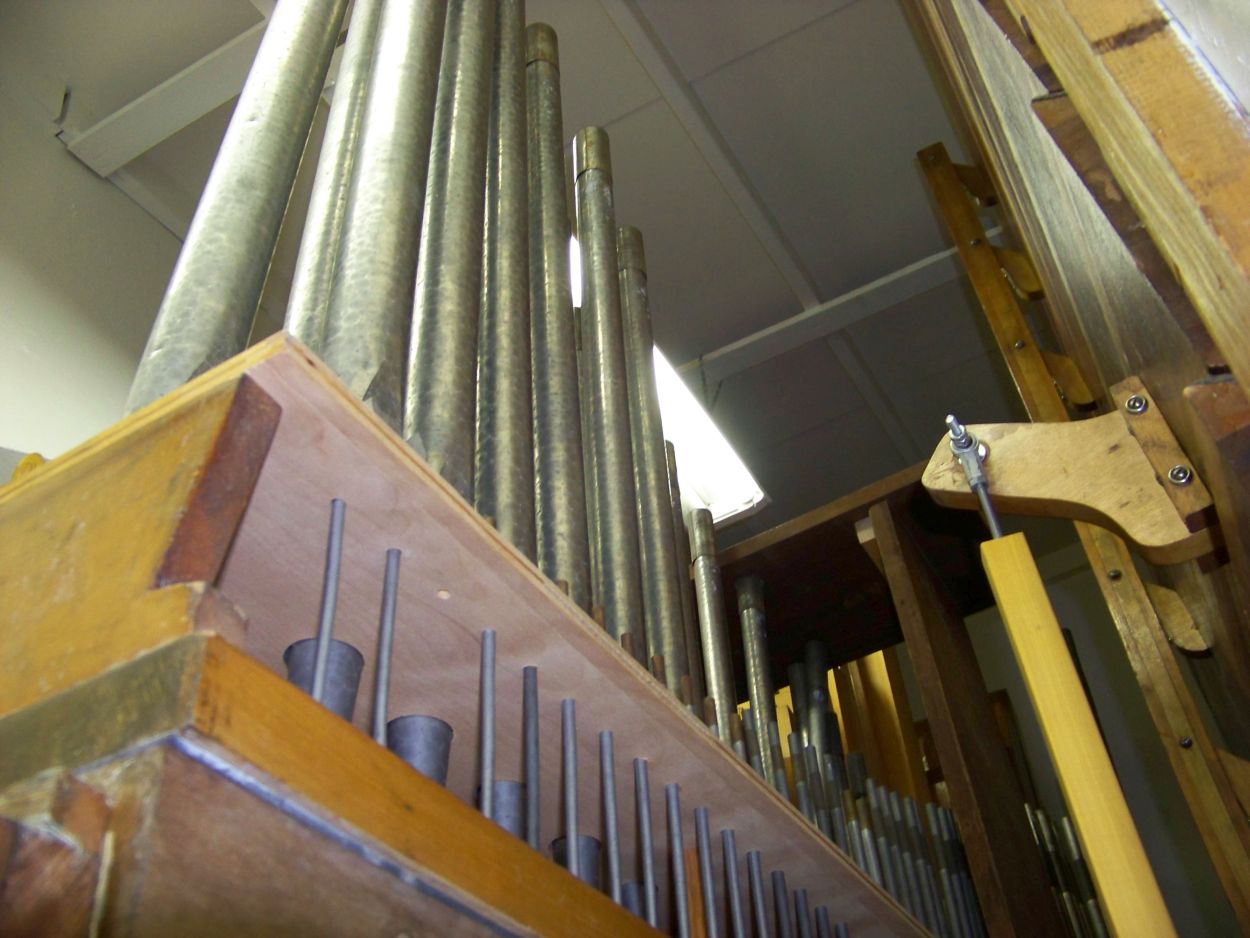
Zion's organ chamber. (2007 photo by Karen)

Zion’s organ chamber. (2007 photo by Karen)
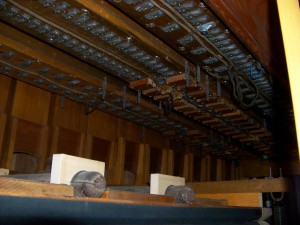
Zion's organ chamber. (2007 photo by Karen)

Zion’s organ chamber. (2007 photo by Karen)

You just never know what unexpected sound might come out of a pipe organ, but our Page organ is a unique instrument that provides a wonderful sound for our worship services.


[1] In the 1913 photo: No one identified in front row; Row 2: Marie Baker, Marie Heffner, ?, Rev. Loehr, Leona Strabel, Marie Becker, Clara Miller; Row 3: ?, ?, ?, Leona Baker. The others in the class, but not identified in the photo: Lavina Marie Becher, Donald Heitzwebel, John Stein, Catharine Kuehm, Roman Heffner, Fried Berron, Raymond Kuhn, Walter Edward Heffner, George Stein.

[2] In the 1917 photo: Front row: Luetta Baker, Lucile Becher, ?, Louise Becher, ?, Matilda Becher, Anna Ruth McGough; Row 2: Clarence Kuhn, Walter Becher, ?, Charles Andrews; Row 3: ?,?, Rev. Heuer, ?, Vera Heffner (far right). The others in the class, but not identified in the photo: Frieda Louisa Hoehammer, Harold Roman Bender, Ralph Huffman, Lee Kuhn, Florence Kuhn, Clara Linn.

Sources:

Theatre Organ, Wikipedia 

Page Pipe Organ Company, Wikipedia

Tombstone Tuesday–Pauline Becher

Pauline Becher, Zion Lutheran Cemetery, Mercer County, Ohio (2011 photo by Karen)

Pauline Becher, Zion Lutheran Cemetery, Mercer County, Ohio (2011 photo by Karen)

This is the tombstone of Pauline Emma Becher, located in row 7 of Zion Lutheran Cemetery, Chattanooga, Mercer County, Ohio. The marker is inscribed:

PAULINE Dau. of
Wm. P. & C.S. Becher
1912

Pauline Emma Becher was born prematurely at 7:30 p.m. on 2 August 1912 at her parents’ home in Liberty Township, Mercer County, Ohio. She was the sixth child born to William P. and Katie (Schaadt) Becher. The records do not say how premature she was but she must have been very weak because her parents had her baptized at 10:30 p.m. that same evening. Conrad Heffner served as her baptismal sponsor.

Pauline Emma died the next day, 3 August, at 10:00 a.m., having lived only 14 ½ hours.

Pauline was buried on the 4th and the church records also indicate that she was survived by her parents, brothers and sisters, and the William Becher family. The records gave her cause of death as premature birth.

Pauline Becher death certificate. [1]

Pauline Becher death certificate. [1]

Pauline’s parents were both from Liberty Township and her grandparents were John and Anna Maria (Becker) Becher and Adam and Mary (Koch) Schaadt.


[1] “Ohio Deaths, 1908-1953,” database with images, FamilySearch (https://familysearch.org : accessed 3 Sep 2016), Pauline E Becher, 3 Aug 1912; from Liberty, Mercer, Ohio, no. 45137; FHL microfilm 1953425.

Zion Lutheran Church Building in Chatt a Century Old

Last year Zion Lutheran Church in Chattanooga, Ohio, celebrated its 160th anniversary.

This year, although no celebration is planned, we recognize that fact that the current church building was built 100 years ago.

Zion Lutheran Church, 2015.

Zion Lutheran Church, 2015.

The congregation of Zion Chatt was formed in 1855 and for the first five years members worshiped in their homes. In 1860 they purchased a 100 x 85 foot parcel of land on the corner of State Route 49 and Tama Road from Jacob and Charity Deitsch for $5. They built a frame church there that same year for $325.

Zion Lutheran, Chattanooga. Frame church 1860-1917. (Photo c1912)

Zion Lutheran, Chattanooga. Frame church 1860-1917. (Photo c1912)

Zion Lutheran, Chattanooga. Frame church. (1860-1917)

Another view of the frame church, c1917.

The frame building was used by Zion’s members as well as the Evangelical worshipers for seven years, until the Evangelicals sold their interest and organized and built their own church east of Chatt on Tama Road, the building we know today as the old Grange Hall.

Over the years Zion purchased a little more land to make the church lot the size it is today. Discussions and plans for a new church building began as early as 1911 but it was not until 1916 that the building project was finally started.

Zion’s members decided to fashion the new church after the brick M.E. Church in Convoy, Ohio. The architect for the new church was Robert Gotwaldt and the building contractor was Christen & Mann of Decatur, Indiana. Charles N. Christen built several other churches and was the mayor of Decatur in 1913. The cost of Zion’s new church was $13,795.

Zion Chatt's cornerstone.

Zion Chatt’s cornerstone.

The church cornerstone was laid 2 July 1916, during the pastorate of the Rev. W.F.H. Heuer. Rev. B.F. Brandt and Prof. R.V. Schmitt presided at the cornerstone dedication with Rev. Heuer.

Cornerstone dedication, 1916. Rev. R.V. Smith, Rev. W.H.F. Heuer, Rev. B.F. Brandt.

Cornerstone dedication, 1916. Rev. R.V. Smith, Rev. W.H.F. Heuer, Rev. B.F. Brandt.

Nearly a year after construction began the church building was completed and it was dedicated on 13 May 1917. What a grand dedication it must have been. Three days of events with services in English and German!

The following article announcing the dedication was published in The Standard on 11 May 1917:

DEDICATION
Of Zion’s Evangelical Lutheran Church at Chattanooga to Take Place Sunday, May 13, With Elaborate Program for the Day–

Next Sunday May 13th, the new church edifice of Zion’s Evangelical Lutheran congregation will be dedicated to the service of the Triune God. The members of the congregation desire to extend a cordial invitation to all their friends and acquaintances to come and rejoice with them in the fact an undertaking which presented many difficulties and required many sacrifices has, by the blessings of God been successfully finished and that the members of Zion’s congregation at last possess a worthy and beautiful house of worship.

The following is the order of the dedicatory services:

9:30 a.m.—A brief farewell service in the old church.

9:45—Formal opening of the new church. German sermon by Reverend J.F.C. Sollar of Youngstown, O., and an English sermon by Rev. H.J. Schuh of Anna, O.

2:00 p.m. afternoon services–Rev. George Haas, of Napoleon, O., will preach the German sermon and Rev. Paul Brockhaus, of Oak Lawn, Ill., the English sermon.

6:00 p.m. evening services—Rev. Lochre of Montra, O. and Rev. W.N. Emch of Ft. Recovery, O, will be the speakers. Besides the congregational singing which is in itself an essential feature, there will be special singing by various choirs, viz. the mixed choir and the male choir of Zion’s church, the male sextet of St. John’s church, Celina, and the male Liberty township.

The time designated is sun time.

Dinner and supper will be served in the basement of the new church for the nominal cost of 25 cents a meal. Additional services will be held on Monday and Tuesday evenings. Rev. F.G. Reitz of Celina will preach on Monday evening and Rev. H.N. Brobst of Coldwater on Tuesday evening. The organist Miss Bernice Haffner, will be assisted at the organ by Miss Clara Sunderman of Ft. Recovery and by Mrs. Rev. Brobst, of Coldwater.

May God grant his blessings in these services to all who may be present.

Initially, subscriptions were taken to pay for the new church and a five-year payment plan was adopted. Later “The Dollar Plan” was adopted to cancel the building debt. Members owning land would pay $1 per acre and members who did not own land would pay in proportion to what they had.

Zion's south window, given in honor of Henry and Mary Baker. (2011 photo by Karen)

One of Zion’s many beautiful stained-glass windows. The south window, given in honor of Henry and Mary Baker. (2011 photo by Karen)

The two churches were side by side for a short time, until the frame church was moved to the north end of Chattanooga and used as a garage for years.

The old frame church and new brick church.

The old frame church and new brick church.

The old frame church, used as a garage, 1980.

The old frame church, used as a garage, 1980.

Zion was extensively remodeled in 1968, using money from the Minnie Wilson estate. The upper balcony was made into three Sunday School rooms, the first floor under the balcony was made into two offices and a Sunday School room, and basement was remodeled and paneled. The sanctuary was redecorated in the late 1960s and again redecorated by Henry Husmann of Portland, Indiana, in 1992.

It is still a beautiful church, still in very good condition, with an active congregation.